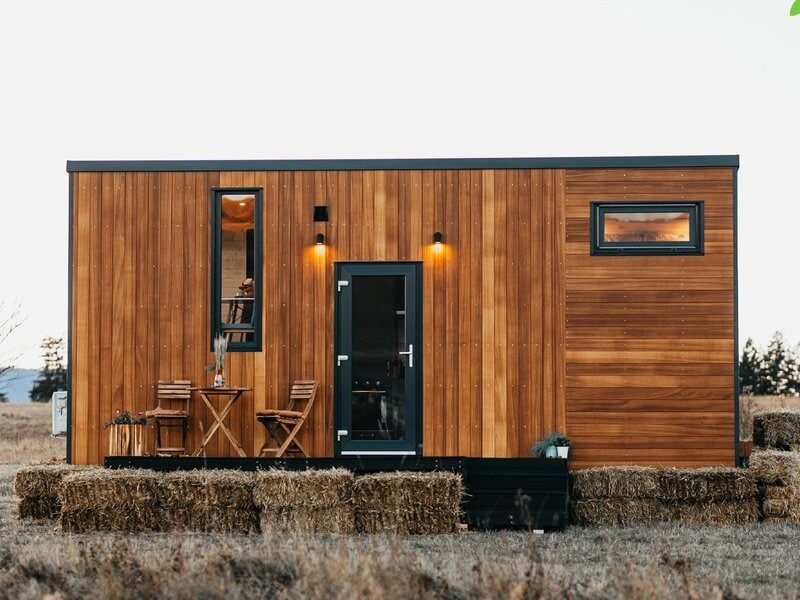
The Tiny Getaway imagines a new typology for small-space architecture by inverting traditional layout logic—placing sleeping areas on lower levels and living zones overhead. This reversal maximizes volume and blurs vertical circulation with functional layering. The design reframes how we move through compact interiors, challenging conventions about what “upstairs” and “downstairs” mean in tiny homes.
Structural elements, such as exposed steel frames and glazed connectors, support dynamic sightlines while preserving openness. The living zone functions as a canopy, with elevated views and light wells drawing attention upward. By relocating resting quarters beneath communal functions, the scheme liberates the central volume for sociability and nesting. In doing so, The Tiny Getaway reinforces the idea that small spaces need not feel constrained, through inventive spatial inversion, limited footprints become experiments in freedom.
Image Credit: Eco Tiny House
Key Themes Behind This Trend
- Vertical Space Optimization
- The Tiny Getaway's inversion of traditional spatial layout demonstrates a trend towards utilizing vertical space in new and efficient ways, challenging the conventional division of living areas.
- Dynamic Circulation Design
- By reinventing vertical movement through compact interiors, this architecture project highlights a rising interest in dynamic circulation that blends functionality with innovative design.
- Open-concept Micro Living
- The use of structural elements to maintain openness reveals a trend towards open-concept micro living that maximizes light and views, altering perceptions of spatial boundaries.
Where This Applies
- Tiny Home Architecture
- Inversion of spatial functions presents a transformative approach in tiny home architecture, offering innovative solutions for maximizing limited spaces.
- Urban Design
- The project’s exploration into compact living spaces signals a shift in urban design towards making smaller, high-density habitats that do not compromise on livability.
- Interior Design
- This architectural approach to layering living spaces impacts the interior design industry by encouraging novel interpretations of space usage within compact environments.