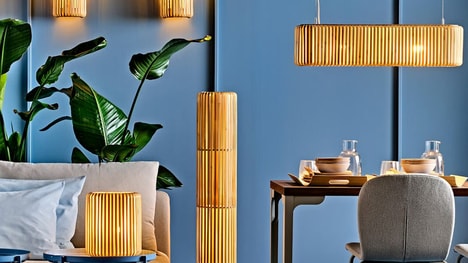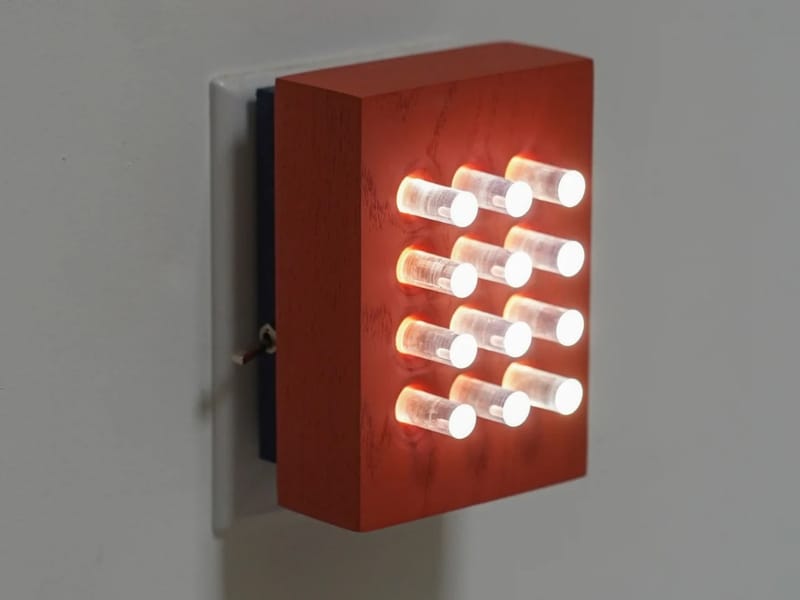
The Reactor is a handcrafted nightlight by Philadelphia-based designer Benjamin Gillespie that expands into a new color series with customizable ambient lighting. The compact design combines a warm white task light with a separate mood light that can be controlled independently to create different lighting conditions. Gillespie builds each piece by hand through his Ovuud studio using locally sourced wood and translucent plexiglass, concealing the LED components within the sculptural form to produce a soft, diffused glow that doubles as functional illumination and decorative lighting.
The color series introduces multiple lighting options that create distinct atmospheres while maintaining the same compact design. The nightlight is intended for bedside tables, shelves, and other interior spaces where low-level illumination is preferred after dark. Gillespie draws on engineering, woodworking, and architectural design principles to develop the collection, which emphasizes material craftsmanship alongside everyday functionality.
Image Credit: Ovuud
What Makes This Trend Stand Out
- Customizable Ambient Lighting
- Personalized light settings in compact home objects are reshaping decor into adaptive atmosphere tools for mood, rest, and nighttime routines.
- Handcrafted Tech Decor
- Artisanal production paired with concealed electronics creates premium opportunities for functional objects that feel crafted rather than mass manufactured.
- Sculptural Utility Objects
- Everyday home essentials are evolving into design-forward pieces that combine practical illumination with visual identity and spatial ambiance.
Sectors Adopting This
- Home Lighting
- Independent control of task and mood illumination points to new product formats that blend utility, personalization, and decorative appeal.
- Interior Design
- Compact lighting pieces made with natural materials support growing demand for flexible accents that enhance atmosphere in small residential spaces.
- Woodworking
- Locally sourced wood integrated with modern LED systems expands the role of craft studios in producing technology-enabled lifestyle goods.