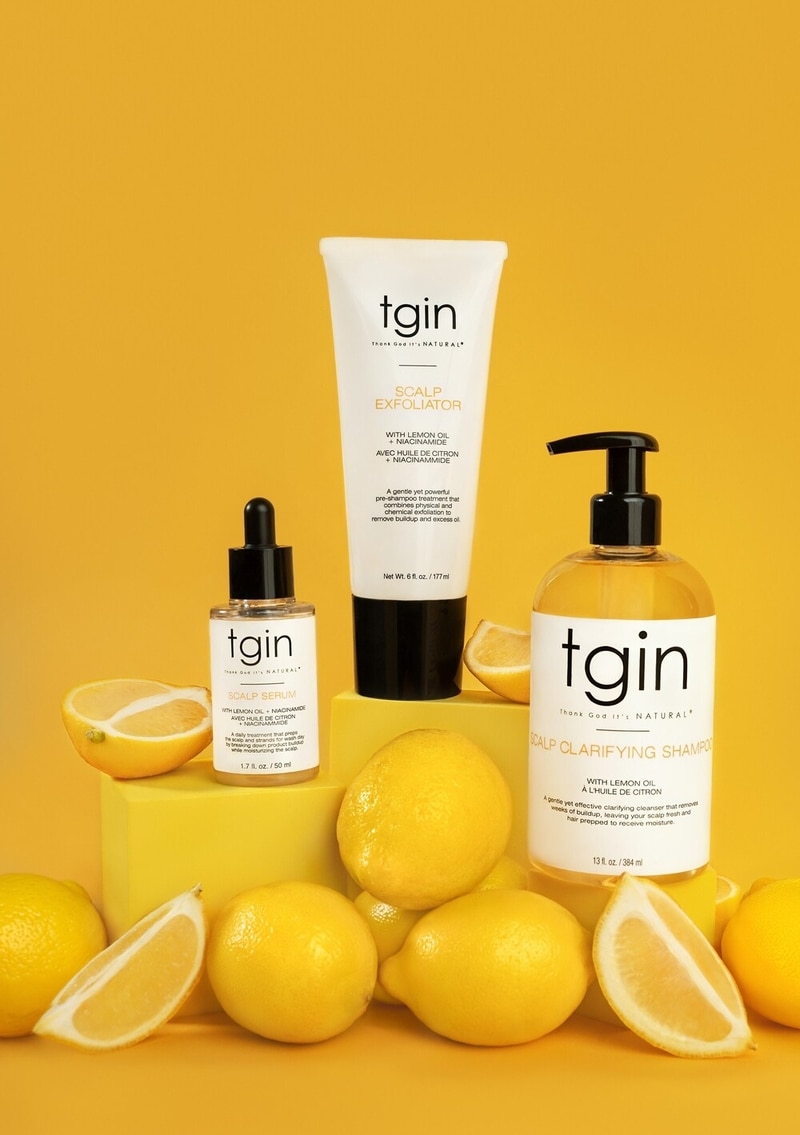
The Balance Collection by tgin (Thank God It's Natural) is a new, science-backed haircare collection that treats the scalp with the same care as the skin. Featuring skincare-inspired ingredients like vitamin-rich lemon oil and niacinamide, the haircare range tackles common scalp concerns with formulas that detoxify, nourish and restore the scalp to a well-balanced, optimized state.
This gentle, skin-caring collection introduces the Scalp Clarifying Shampoo to remove weeks of buildup and a daily Scalp Serum treatment that moisturizes the scalp, helps to rebalance oil production, promotes circulation and supports a stronger scalp barrier. The third targeted solution in tgin's The Balance Collection, the Scalp Exfoliator, takes the form of a cooling pre-shampoo treatment that combines physical and chemical exfoliation.
What Makes This Trend Stand Out
- Skincare-first Scalp Care
- Treating the scalp with skincare principles opens possibilities for serum-led regimens that prioritize barrier repair, microbiome balance, and targeted nutrient delivery.
- Ingredient Crossovers
- The adoption of skincare actives like niacinamide and vitamin-rich oils into haircare formulations signals demand for multifunctional products that address both skin and hair health.
- Pre-and Post-shampoo Targeting
- Cooling exfoliants and leave-on serums framing the wash routine indicate a shift toward layered, protocol-driven scalp treatment programs that manage buildup, oil regulation, and circulation.
Sectors Adopting This
- Haircare
- Scalp-focused product lines present opportunities for brands to differentiate through clinical claims, long-term scalp health positioning, and subscription models for maintenance.
- Dermocosmetics
- Blurring lines between dermatology and beauty suggests room for physician-backed scalp therapies and hybrid OTC-prescription products targeting chronic scalp conditions.
- Beauty Tech
- Measurable scalp diagnostics and personalized formulation platforms could enable data-driven recommendations and bespoke product blends based on sebum, microbiome, and barrier metrics.