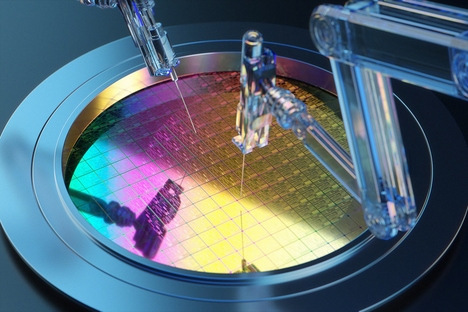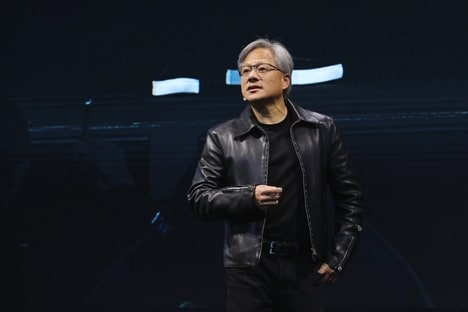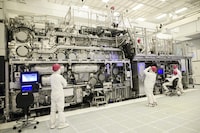

Terafab is a planned large-scale semiconductor fabrication plant announced by Elon Musk, designed to produce advanced chips for AI, automotive and industrial uses, featuring ambitions to exceed existing capacity from competitors. The announcement positioned Terafab as a vertically integrated facility intended to support Musk’s suite of companies and their increasing on‑device compute needs.
Details released during the unveiling described multi‑phase construction, high‑capacity wafer output goals and a focus on scaling production speed and yield, with Musk framing the site as a strategic production hub. For consumers and businesses, Terafab could accelerate access to bespoke chips tuned for electric vehicles, neural networks and robotics, shortening development cycles and reducing supply‑chain dependency while signaling a shift toward company-controlled silicon supply.
Image Credit: Tesla, X, SpaceX
Why This Trend Is Growing
- Vertical Integration of Chipmaking
- A move to vertically integrated fabrication aligns chip design, production and supply to tightly support a company's ecosystem and internal compute requirements.
- Bespoke On-device AI Chips
- Customized silicon tailored for EVs, neural networks and robotics can significantly compress inference latency and optimize power profiles for specific devices.
- Mega-scale Fab Capacity
- Terafab-scale wafer throughput promises to alter global supply dynamics by concentrating massive production capacity under single operators.
Industries Being Reshaped
- Automotive-electric Vehicles
- EV manufacturers stand to see integrated supply of application-specific chips that could change vehicle performance envelopes and feature differentiation.
- Cloud and Data Centers
- High-volume access to optimized AI accelerators can reshape server architectures and cost structures for large-scale model training and inference.
- Robotics and Industrial Automation
- Dedicated, tailored silicon for robotics could enable more autonomous, energy-efficient control systems and tighter real-time processing.