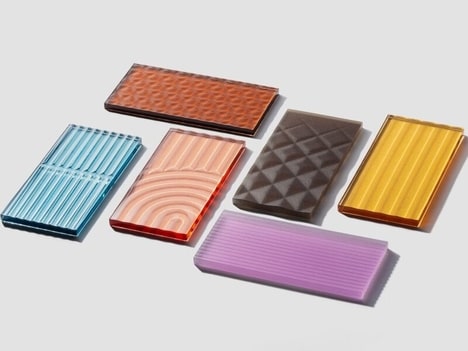
Takataka Plastics, an award-winning commercial partnership between mechanical engineering Ph.D. student Paige Balcom and Ugandan local Peter Okwoko, cuts down on PET pollution by recycling plastics into low-cost commercial products. Takataka Plastics provides a much-needed low-tech solution to the problem of plastic pollution in isolated Ugandan towns by using manually operated machines to remold plastic waste into usable forms like wall tiles.
Due to the innovative design process, the wall tiles on offer from Takataka Plastics are less expensive and more durable than popular ceramic tiles. The recycled plastic wall tiles come in a range of colors and patterns that showcase the mixed plastic construction and maintain a stylish and modern look. Besides the wall tiles, Takataka Plastics also offers beautiful recycled plastic coasters as well as pandemic-ready face shields.
Image Credit: Core77
Why This Trend Is Growing
- Recycled Plastic Products
- The demand for more eco-friendly and sustainable products can drive the growth of recycled plastic products in various industries.
- Low-tech Solutions
- The use of low-tech machinery in recycling plastics can create disruptive innovations for waste management systems in developing countries.
- Stylish Sustainable Design
- Incorporating sustainable materials in stylish and modern designs can provide opportunities for disruptive innovation in the home decor and fashion industries.
Industries Being Reshaped
- Construction Industry
- Recycled plastic wall tiles can create sustainable building materials which can disrupt the construction industry.
- Waste Management Industry
- The use of low-tech machinery in recycling plastic waste can create disruptive innovation for waste management systems in developing countries.
- Home Decor Industry
- Incorporating sustainable materials like recycled plastic in stylish home decor designs can create disruptive innovation opportunities for the industry.