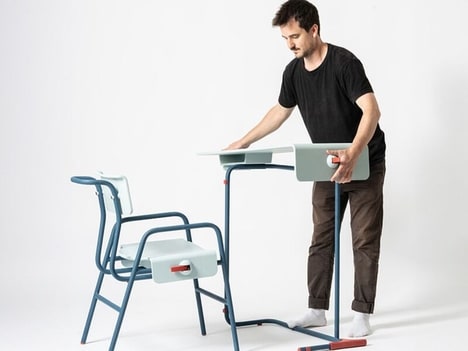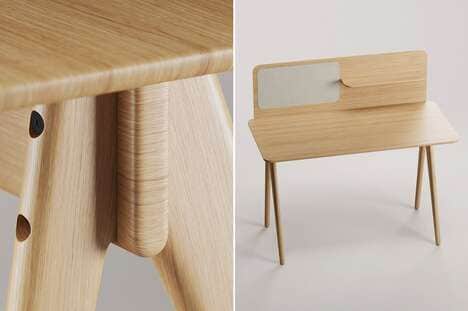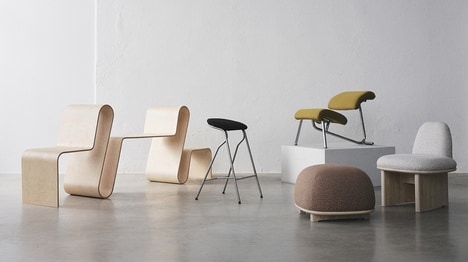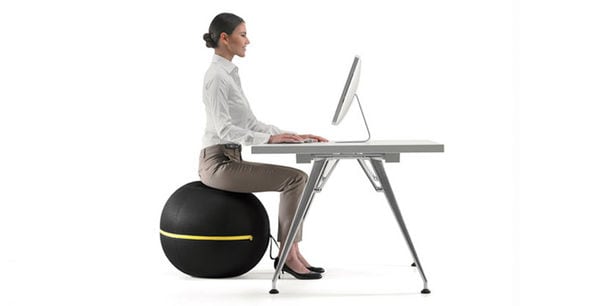

Students of all ages work almost as much in groups as they do individually in the classroom; the Synthesis Collaborative Desk addresses these changing seating arrangements. While pairing two traditional desks can be easy, and even four or six, odd numbers often become a headache. Nevertheless, the subtle curve in the Synthesis Collaborative Desk allow, say, five desks to take on a fan-like formation that is easy to assemble and pleasing to the eye.
Designed by Seth Moczydlowski, a student based in Philadelphia, Pennsylvania, the Synthesis Collaborative Desk juxtaposes brightly colored tops with wooden legs for a modern aesthetic that will surely inspire creativity. Stackable, durable, and lightweight, they nevertheless focus as much on function as they do on form.
What's Driving This Trend
- Collaborative Learning Spaces
- Creating versatile and adaptable learning environments that cater to both group and individual activities.
- Modular Furniture Design
- Developing furniture solutions that can be easily assembled and reconfigured to meet changing needs and seating arrangements.
- Integration of Form and Function
- Balancing aesthetics and functionality in furniture design to enhance the overall learning experience.
Who This Affects Most
- Education
- Providing innovative furniture solutions to schools and educational institutions to support modern learning methodologies.
- Furniture Manufacturing
- Exploring opportunities to design and produce modular furniture that offers flexibility and adaptability.
- Interior Design
- Incorporating modular furniture designs into interior spaces to create functional and aesthetically pleasing environments.