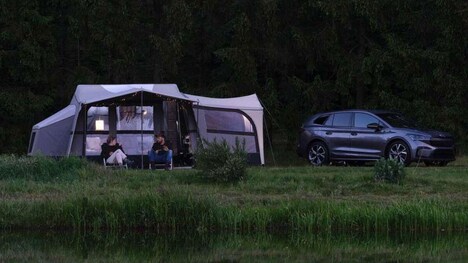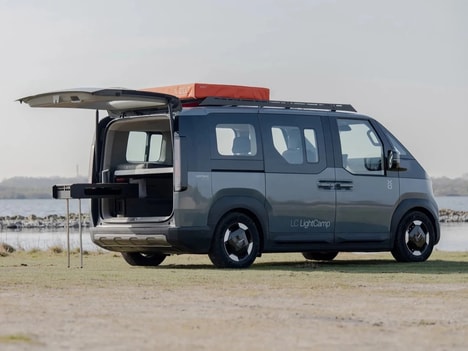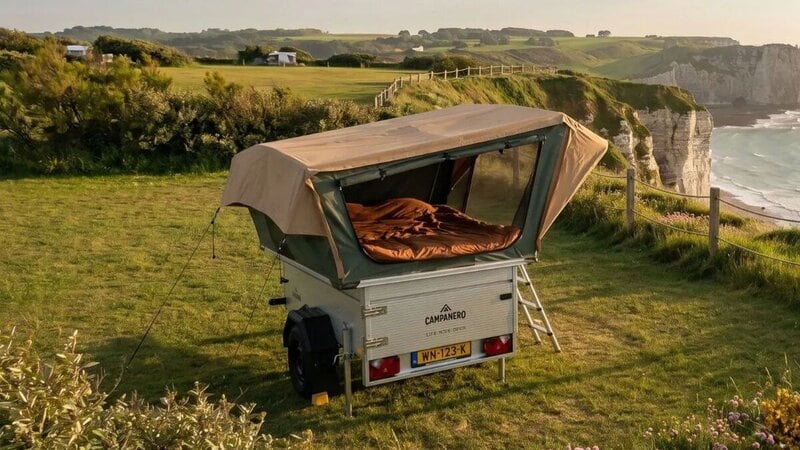
Campanero built a tent trailer that lets campers keep one towable base and swap the sleeping enclosure as trips grow from a couple's getaway to a family outing. Its 'Pah-Pah' and 'Eck-Oh' setups attach to the same lightweight platform, and a six-person 'Char-Lee' is planned for the same zip-on format.
In Pah-Pah form, the trailer weighs 705 lb, keeping it within reach of small cars and EVs. The larger Eck-Oh expands the same base to four sleepers, so buyers can add room as needed without learning a new trailer layout.
Pricing starts at €13,950, making the shared-base idea a practical upgrade path rather than a concept. It shifts the category toward a hybrid between tents and fixed campers, letting buyers add space as needs change without replacing the whole trailer.
Image Credit: Campanero
Key Themes Behind This Trend
- Modular Camping Platforms
- Shared towable bases with swappable sleeping modules create room for upgrade-based ownership models that reduce replacement costs and extend product lifecycles.
- Lightweight Ev-towable Trailers
- Sub-1,000-pound camper systems align outdoor recreation with smaller cars and electric vehicles, opening space for accessible low-impact travel products.
- Expandable Family Gear
- Adaptable outdoor equipment that grows from couples’ use to family capacity reflects a shift toward flexible purchases that match changing household needs.
Where This Applies
- Outdoor Recreation
- Modular tent-trailer formats blur the line between camping gear and campers, creating new product tiers between basic tents and fixed RVs.
- Recreational Vehicles
- Shared-base trailer systems introduce a component-based alternative to traditional RV ownership, where customers can scale capacity without buying an entirely new unit.
- Electric Mobility
- Lightweight towable camping solutions complement EV adoption by reducing towing barriers and supporting travel products designed around range-conscious consumers.