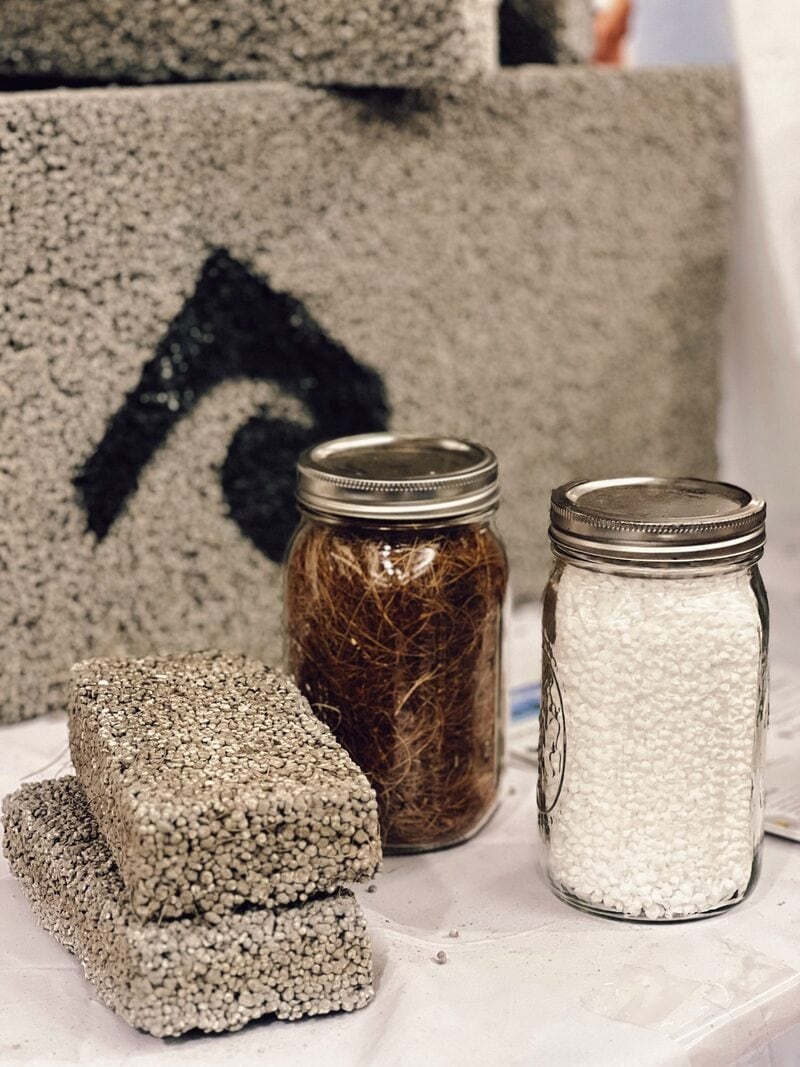
Surf Block Maui—an offshoot of Hawai‘i Off Grid Architecture, upcycles foam scraps from local surfboard shapers into insulated composite concrete form (ICCF) blocks. Made of about 85% recycled EPS foam bonded with cement, these modular blocks require one-third less concrete than traditional cinder blocks and offer double the insulation performance. They’re fire-resistant, termite-proof, mold-resistant, and four times stronger than wooden walls in hurricanes.
Founder David Sellers discovered untapped potential when he observed dumpsters filled with polystyrene foam from surfboard manufacturers. His team secured a grant, developed pilot blocks, and is now constructing resilient, low-carbon homes—including one nearing completion in Olowalu. With local supply and low embodied carbon, Surf Blocks directly address both environmental waste and construction needs.
Image Credit: Surf Block Maui
Why This Trend Is Growing
- Sustainable Construction Materials
- The innovation of transforming surfboard foam waste into building materials emphasizes the shift toward eco-friendly construction solutions.
- Circular Economy Practices
- Utilizing local waste products for new applications showcases the growing trend of circular economy practices in reducing environmental impact.
- Resilient Building Solutions
- The development of durable, insulated building blocks reflects the emphasis on constructing resilient homes that withstand extreme weather events.
Industries Being Reshaped
- Green Building
- The advancement of recycled materials in construction highlights opportunities for the green building industry to innovate sustainable practices.
- Waste Management
- Repurposing foam waste from surfboards into building materials reveals potential for the waste management industry to integrate novel recycling methods.
- Disaster-resilient Housing
- The creation of robust, insulated composite blocks presents significant advances in the disaster-resilient housing sector.