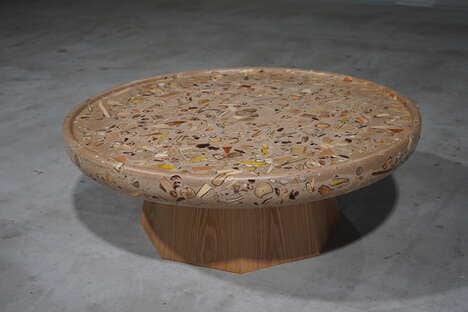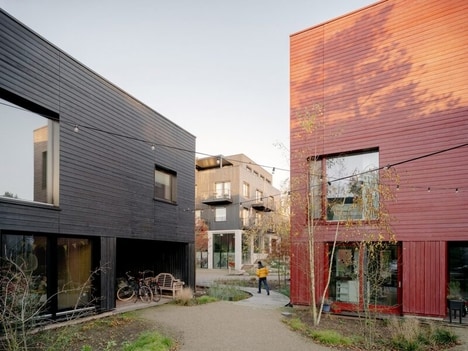
Chemically modified Superwood turns conventional timber on its head by achieving up to ten times the strength-to-weight ratio of steel. InventWood’s process restructures wood at the molecular level by removing lignin and compressing cellulose fibers to create a material that is not only super-charged in tensile performance but also bullet-proof, fire-resistant, and visually warm.
The environmental potential is high: it is an overlooked species and wood waste transforms into durable structural elements. This could be used to replace steel in beams, architectural cladding, or automotive components. Because it retains classic wood grain and texture, Superwood opens design possibilities such as soaring cantilevers and minimalist façades without sacrificing environmental integrity. With commercial production underway and major funding secured, this innovation offers architects and designers a compelling material for building truly sustainable, high-performance structures.
Image Credit: InventWood
What Makes This Trend Stand Out
- Sustainable High-performance Materials
- Superwood's ability to surpass steel in strength while maintaining eco-friendliness highlights an emerging focus on sustainable, high-performance building materials.
- Advanced Timber Engineering
- The development of Superwood illustrates a trend in timber engineering where traditional materials are restructured at a molecular level to enhance performance.
- Wood Waste Utilization
- The transformation of wood waste into durable and strong structural elements signals a trend of circular economy practices in material science.
Sectors Adopting This
- Construction and Architecture
- The construction industry can leverage Superwood for eco-friendly and high-strength applications in buildings and facades, challenging traditional steel and concrete solutions.
- Automotive Manufacturing
- Automotive manufacturers could explore the use of Superwood for lightweight and durable components, contributing to vehicle efficiency and sustainability.
- Material Science
- Within material science, the innovation of Superwood exemplifies a shift towards manipulating natural materials at a molecular level for enhanced properties.