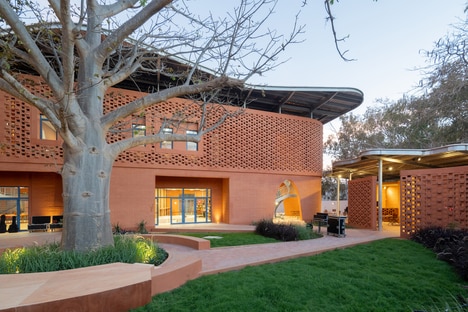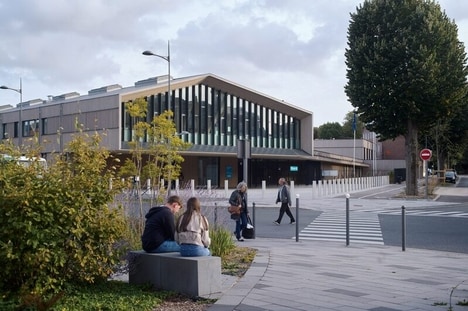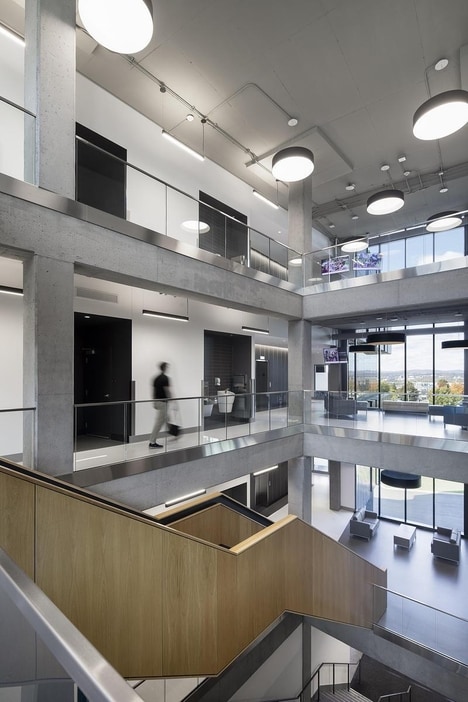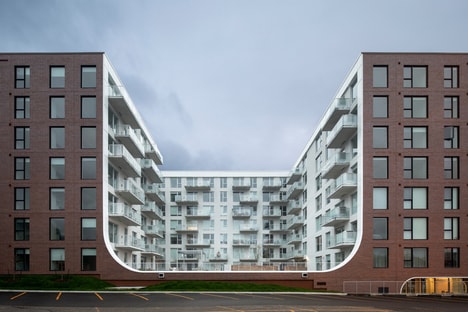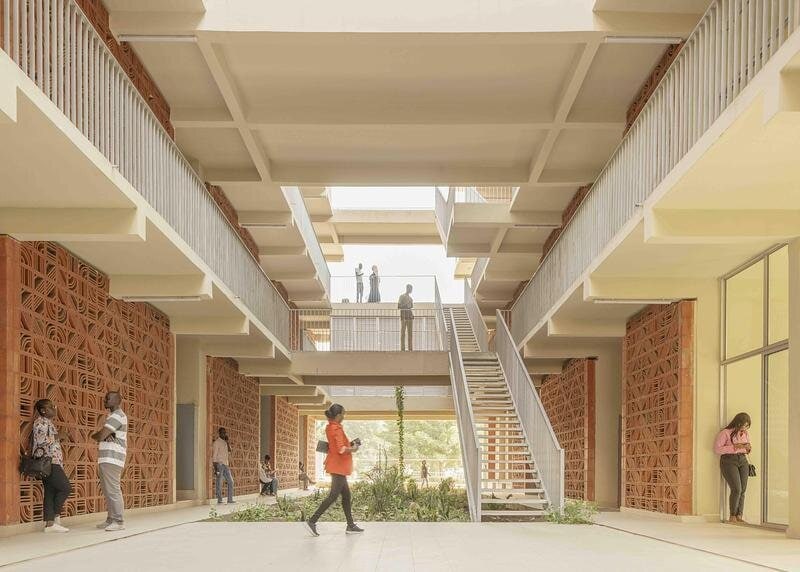
Hardel Le Bihan Architects, in collaboration with Alun Be agency, has designed the UCAD Dakar student housing project. This is the first completed unit in a large-scale bioclimatic program for Cheikh Anta Diop University that will ultimately accommodate approximately 10,000 students across 16 buildings spread over two sites.
Hardel Le Bihan Architects' design for the UCAD Dakar student housing project prioritizes thermal comfort and quality of interior spaces through careful material selection, natural ventilation strategies, a balance between sun protection and sufficient natural light, and wind channelling. The buildings are composed of four floors of bedrooms and study rooms above ground-floor communal spaces including TV rooms, laundry facilities, concierge services, and shop premises.
The architectural morphology features two wings on either side of a central walkway designed as an interior garden, favoring coolness and natural ventilation by accounting for prevailing north-easterly winds during the dry season and north-westerly winds during the monsoon season,.
Image Credit: Schnepp Renou
Key Themes Behind This Trend
- Bioclimatic Student Residences
- Campus housing that integrates passive cooling, daylight balance, and climate-responsive layouts presents new potential for lower-energy living environments in dense education hubs.
- Ventilated Communal Walkways
- Interior garden corridors shaped around prevailing winds suggest a shift toward shared circulation spaces that improve comfort while fostering social connection.
- Climate-conscious Campus Scaling
- Large student housing programs designed as repeatable bioclimatic modules reveal opportunities for expanding university infrastructure without relying heavily on mechanical systems.
Where This Applies
- Higher Education
- Universities facing rapid enrollment growth can benefit from housing models that combine affordability, comfort, and sustainable performance at institutional scale.
- Architecture
- Design firms are increasingly positioned to differentiate through passive environmental strategies that respond to local climate conditions and cultural patterns of use.
- Real Estate Development
- Student accommodation developers may find value in resilient, low-operating-cost properties that align with demand for healthier and more sustainable urban living.