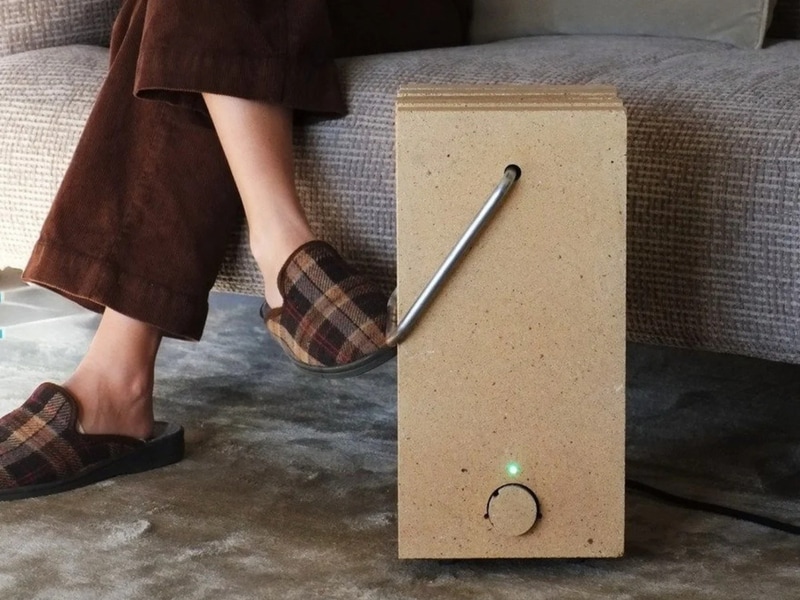
The STEA heater by Eliot Andrault is a personal heating device built around refractory bricks that store and gradually release warmth. The STEA heater by Eliot Andrault operates on a cycle of approximately ten minutes of heating followed by around twenty minutes of passive heat emission, reducing continuous energy draw. The design focuses on warming the user directly rather than heating an entire room, creating a localized microclimate around the body.
The structure references traditional cast-iron radiators through vertically stacked brick elements, paired with a tubular steel handle for portability. The bricks provide thermal inertia, allowing heat to dissipate slowly instead of producing a constant airflow. The device is designed for disassembly using a single tool, with locally sourced and recyclable materials. The concept was developed as a student project at La Cambre in Belgium.
Image Credit: Eliot Andrault
What Makes This Trend Stand Out
- Thermal Inertia Personal Heating
- A shift toward devices that store and slowly release heat, enabling intermittent power use and sustained warmth without continuous energy draw.
- Localized Microclimate Devices
- Designs that prioritize warming the individual over spaces, creating targeted comfort zones around occupants and reducing building-level heating demand.
- Recyclable Modular Construction
- An emphasis on disassemblable products made from locally sourced, recyclable components that simplify repair, reuse, and circular supply models.
Sectors Adopting This
- Home Heating
- Emerging appliances that combine thermal mass with intermittent heating cycles present alternatives to central heating systems and peak-load pressures on grids.
- Outdoor and Lifestyle Gear
- Portable warmth solutions using refractory materials can enable lighter, battery-efficient personal heating products for outdoor activities and remote work.
- Sustainable Manufacturing
- Production methods focused on modular, locally sourced materials create opportunities for low-waste fabrication and new service models around product longevity.