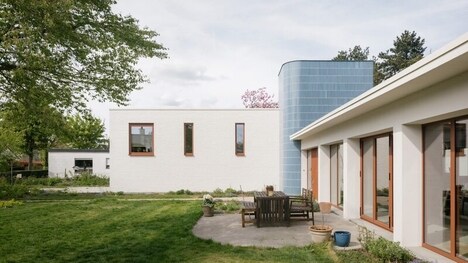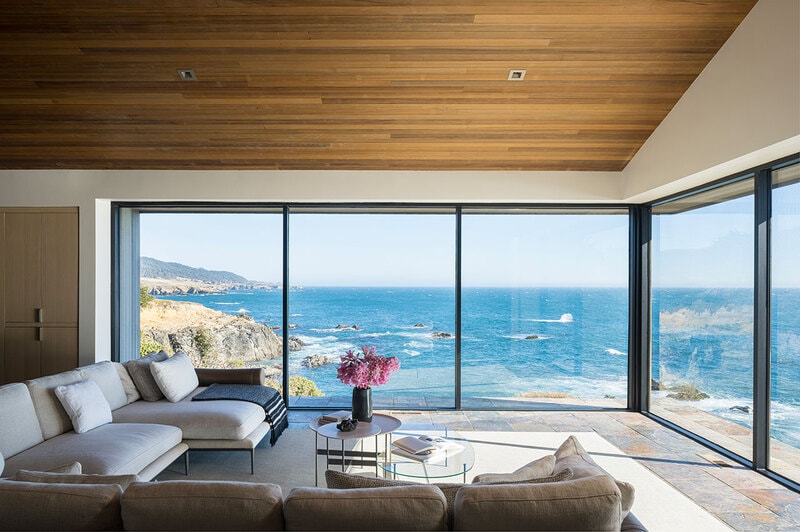
The Standing Wave House is a single-family residence located in Sea Ranch, California, designed to respond precisely to its coastal environment. The home is organized around long horizontal volumes that frame views of the Pacific Ocean while controlling exposure to wind and glare. Openings are carefully positioned to capture shifting daylight conditions, and exterior overhangs help moderate direct sunlight. The structure follows Sea Ranch design guidelines while introducing subtle variations in form and orientation.
Interior spaces emphasize acoustic and sensory control through material selection and spatial sequencing. Wood-lined surfaces help absorb and diffuse sound, reducing echo while enhancing warmth. Rooms transition gradually between enclosed and open areas, allowing occupants to experience changes in light, sound, and temperature throughout the day. Operable windows and ventilation strategies support passive airflow, and outdoor terraces extend living spaces into the surrounding landscape.
Image Credit: Suchi Reddy
Key Themes Behind This Trend
- Sensory-responsive Design
- Homes that adapt to light, sound, and temperature changes offer innovative solutions for enhancing occupant comfort and overall well-being.
- Sustainable Home Architecture
- Architectural designs that integrate passive airflow and natural ventilation align with eco-conscious building practices and reduce reliance on mechanical systems.
- Acoustic Optimization in Interiors
- Incorporating sound-absorbing materials within homes provides an emerging path for creating tranquil indoor environments and improving residential quality of life.
Where This Applies
- Residential Architecture
- The design approach of emphasizing environmental responsiveness presents opportunities to revolutionize residential architecture and appeal to eco-minded homeowners.
- Interior Design
- The focus on acoustic and sensory control opens pathways for interior design innovations that prioritize occupant experience through carefully chosen materials.
- Renewable Energy and Ventilation
- Strategies for passive airflow in residential properties suggest advancements in energy-efficient building systems and ventilation technologies.