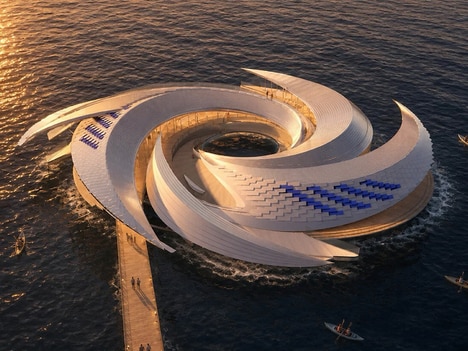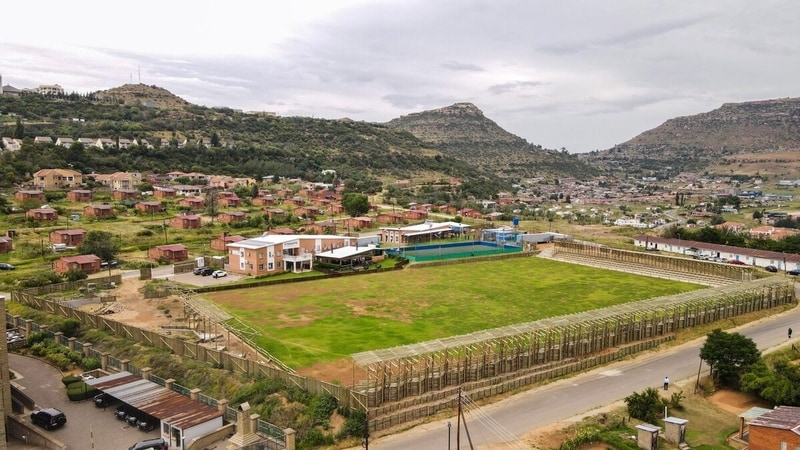
The Stadium of Life is a concept developed by RISE International that rethinks the role of sports infrastructure within cities. The proposal combines a football stadium with integrated vertical farming systems, creating a venue that supports both recreation and food production. Rather than operating solely during sporting events, the project is intended to function throughout the year with spaces dedicated to education, community activities, and agricultural programs. Growing facilities are incorporated directly into the architecture, allowing cultivation areas to become a visible part of the stadium environment.
The design explores how large-scale sporting venues could support broader urban needs beyond entertainment. Public amenities, learning spaces, and food-growing infrastructure are woven throughout the proposal, creating multiple uses within a single development. By combining agriculture with sports facilities, the concept introduces an alternative model for stadium architecture that expands the function of these buildings within surrounding communities.
Image Credit: Rise International
What Makes This Trend Stand Out
- Multi-use Stadiums
- Stadiums designed for continuous community programming signal new revenue and engagement models by serving sports, education, and civic functions year-round.
- Integrated Urban Agriculture
- Embedding vertical farming into public infrastructure creates localized food production that alters supply chains and land-use priorities in dense cities.
- Community-centric Design
- Designs that prioritize visible public amenities and learning spaces within large venues reshape perceptions of civic infrastructure as inclusive, multifunctional assets.
Sectors Adopting This
- Sports Venue Management
- Operational models that support daily community activities and food production require rethinking staffing, scheduling, and facility maintenance economics.
- Urban Agriculture Technology
- Compact vertical-farming systems tailored for mixed-use buildings present opportunities for modular, low-footprint cultivation integrated with nontraditional structures.
- Real Estate Development
- Developments that combine recreational, educational, and agricultural uses redefine project valuation and community impact metrics for urban land projects.