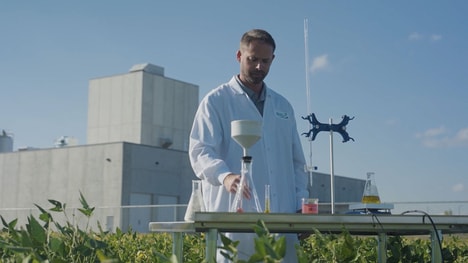
Bio-Techne has unveiled an innovative spatial biology tool through its Early Access Program, introducing a novel assay that enables high-resolution visualization of protein interactions within intact tissue samples. This technology represents a significant advancement over traditional methods by preserving spatial context while detecting functional protein proximity, rather than simply identifying protein presence.
Bio-Techne's spatial biology tool was built upon the company's established RNAscope™ platform. The assay integrates with existing multiomic workflows, allowing researchers to examine molecular interactions at subcellular levels while maintaining compatibility with standard laboratory equipment like the BOND RX system. The approach addresses key limitations of conventional techniques, which often sacrifice spatial precision when analyzing protein-RNA relationships or provide only bulk measurements without tissue localization.
Image Credit: Bio-Techne
Why This Trend Is Growing
- High-resolution Protein Visualization
- The ability to visualize protein interactions at high resolution in intact tissue samples highlights a shift towards enhanced precision in spatial biology.
- Integration with Multiomic Workflows
- Seamless integration of new spatial biology tools with existing multiomic workflows signifies a growing trend towards comprehensive and cohesive biological analysis.
- Subcellular Interaction Analysis
- Analyzing molecular interactions at the subcellular level opens new pathways for understanding complex biological processes in their native environments.
Industries Being Reshaped
- Spatial Biology Technologies
- The emergence of advanced spatial biology tools is poised to revolutionize the way researchers visualize and interpret biological interactions.
- Biotechnology and Assay Development
- Rapid advancements in assay development within the biotechnology industry underscore a commitment to improving the accuracy and functionality of biological research tools.
- Laboratory Equipment and Automation
- Innovations compatible with standard laboratory equipment reflect the industry's focus on enhancing usability and scalability in research technologies.