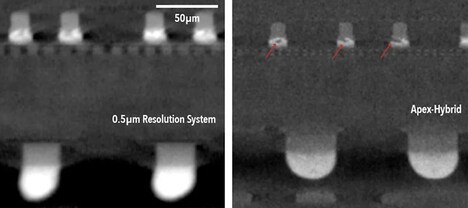

Sscopy is a digital imaging platform focused on enhancing the analysis of microscopic samples through spatial visualization. It enables researchers, lab technicians, and scientific professionals to examine and interpret microscopic data with greater precision and clarity.
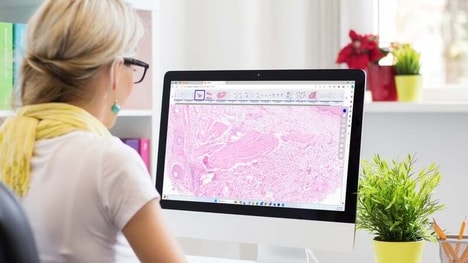
With advanced spatial imaging capabilities, Sscopy helps users move beyond traditional 2D images, offering a more comprehensive perspective on sample structures. This is particularly valuable in sectors such as biomedical research, materials science, and environmental monitoring, where detailed visual data can influence decision-making and innovation. Sscopy's interface is designed to support efficient workflows, allowing users to explore, annotate, and compare high-resolution imagery with ease. For labs and institutions seeking to modernize sample analysis while improving data accuracy, Sscopy offers a practical, tech-forward solution.
Image Credit: Sscopy
Why This Trend Is Growing
- Enhanced Spatial Imaging
- The evolution of spatial imaging platforms like Sscopy allows users to delve deeper into microscopic samples, offering unprecedented clarity and accuracy.
- 3D Microscopic Visualization
- Transitioning from traditional 2D imaging, technologies that provide 3D visualization offer comprehensive perspectives on sample structures, revolutionizing data interpretation.
- AI-assisted Image Analysis
- Artificial intelligence integration in imaging technology enhances precision in data analysis, aiding researchers in drawing more accurate conclusions from microscopic data.
Industries Being Reshaped
- Biomedical Research
- Incorporating advanced imaging platforms transforms data accuracy and visualization in biomedical research, driving innovation in disease study and treatment development.
- Materials Science
- Enhanced imaging techniques are shifting the landscape in materials science, facilitating a better understanding of complex material structures and properties.
- Environmental Monitoring
- Advanced spatial imaging supports detailed monitoring and analysis of environmental samples, crucial for assessing ecological conditions and changes.