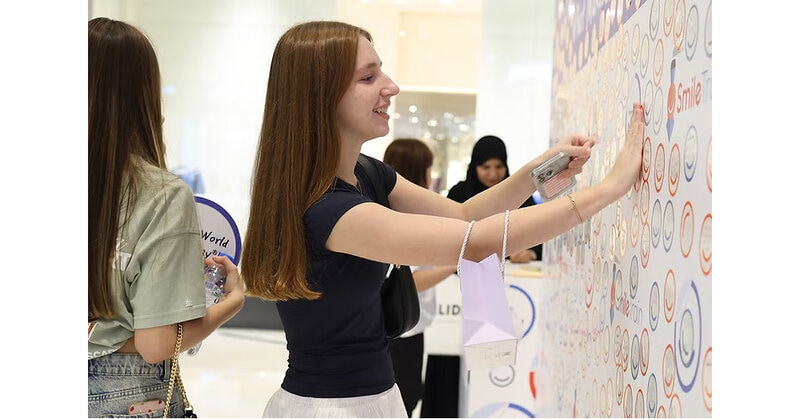
Smile Train is bringing its Smile Wall campaign to Grand Central Terminal, creating a participatory display where visitors add notes, sketches, and personal reasons to smile. The World Smile Day activation returns for a second year and pairs a bright public-art moment with awareness for children affected by cleft conditions.
Placed in the Graybar Passage, the wall turns commuter traffic into a shared canvas instead of a passive backdrop. That matters because it asks people to contribute, not just pass through, and it gives a quick station stop a human, many-to-many feel. Jenna Waller and Elle Smith are also set to join at noon.
The campaign demonstrates how participation can give a cause-led activation more life than a traditional display. By inviting people to add their own messages and extending the concept through digital and DIY versions for schools and workplaces, Smile Train creates a format that can be adapted beyond the original installation and reach people in different settings.
Image Credit: Smile Wall
What's Driving This Trend
- Participatory Public Art
- Shared canvases in high-traffic spaces turn audiences into contributors, creating richer cause engagement than static advertising.
- Cause-led Micro-activations
- Brief commuter interactions can carry emotional storytelling, making everyday transit moments more memorable for nonprofit awareness campaigns.
- Hybrid Awareness Campaigns
- Physical installations paired with digital and DIY formats expand reach across schools, workplaces, and public venues.
Who This Affects Most
- Nonprofit Marketing
- Interactive contribution models give advocacy organizations scalable ways to build personal connection around complex social and health issues.
- Out-of-home Advertising
- Public displays that invite participation offer brands and causes more dynamic engagement metrics than impression-based placements.
- Experiential Events
- Portable, repeatable installation concepts create adaptable programming for campuses, offices, stations, and civic spaces.