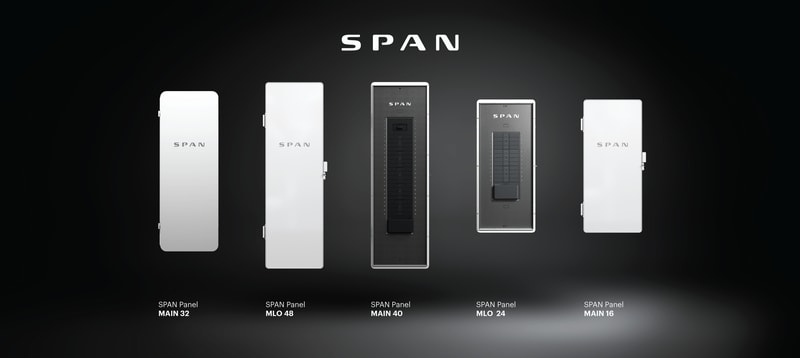
SPAN, a company specializing in intelligent home energy management systems, has expanded its product range with the introduction of two new smart electrical panels — the MAIN 16 and the MLO 24. These additions are designed to cater to homes with smaller electrical service requirements or those needing a supplementary subpanel to complement the larger models already available.
The core functionality of all of SPAN's smart electrical panels involves providing homeowners with detailed, circuit-level monitoring and control over their electricity consumption through a software platform. This system is engineered to facilitate the integration of high-demand appliances like electric vehicle chargers and heat pumps without necessitating an expensive upgrade to the utility service connection. Furthermore, when combined with solar panels and a home battery, the panel's energy management software can optimize backup power during outages and potentially extend battery duration.
Image Credit: SPAN
Why This Trend Is Growing
- Home Energy Micro-management
- Smart electrical panels are enabling precise control and monitoring at the circuit level, empowering consumers to fine-tune their energy usage.
- Integrated Renewable Solutions
- The combination of SPAN panels with solar power systems and home batteries exemplifies a move towards seamless renewable energy integration for residential buildings.
- Expansion of Smart Subpanels
- The development of supplementary smart subpanels like the MAIN 16 and MLO 24 represents a burgeoning focus on modular, scalable energy solutions for varied home sizes.
Industries Being Reshaped
- Renewable Energy
- Innovations in smart panels are creating new synergies between solar energy systems and energy storage solutions, enhancing sustainability outcomes.
- Home Automation
- The advancement of home energy panels equipped with sophisticated monitoring capabilities is driving further integration within smart home ecosystems.
- Electric Vehicles
- Cutting-edge electrical panel systems are simplifying the adoption of electric vehicle chargers by managing power loads without hefty infrastructure upgrades.