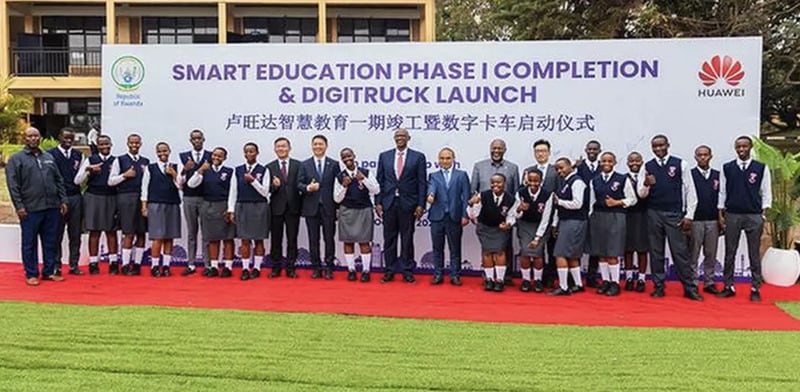
A collaborative initiative between the technology firm Huawei and the government of Rwanda has reached a significant milestone with the conclusion of the initial stage of a national Smart Education Project. This phase involved establishing internet connectivity for a large number of schools and constructing data centers to support a dedicated educational network.
Concurrently, a new mobile education program called DigiTruck was launched. This mobile classroom is solar-powered and equipped with digital learning tools. DigiTruck is designed to travel to remote areas to provide digital literacy training to populations such as farmers and out-of-school youth.
The Smart Education Project with Huawei is aligned with the country's strategic objectives to develop a knowledge-based economy and reduce the digital skills gap among its citizens. For students and educators in connected schools, the immediate benefit is access to a vast repository of global educational resources, online libraries, and interactive learning platforms, which can dramatically enrich the curriculum and provide exposure to information and teaching methods previously unavailable.
Image Credit: Huawei
What Makes This Trend Stand Out
- Mobile Learning Platforms
- Portable and adaptable digital learning solutions, like solar-powered mobile classrooms, enable educational access in remote locations.
- Digital Literacy Expansion
- Initiatives focused on digital literacy training are essential for bridging the educational gap, especially for marginalized communities.
- Infrastructure in Smart Education
- Building dedicated educational networks with robust internet connectivity is critical to transforming traditional education systems into smart learning environments.
Sectors Adopting This
- Educational Technology
- The alliance of tech companies with public sectors in education amplifies opportunities for innovation in digital learning tools and resources.
- Renewable Energy Solutions
- Solar-powered educational facilities exemplify the fusion of renewable energy technologies with pragmatic community services.
- Telecommunications
- Advanced data infrastructure and pervasive connectivity are pivotal in driving forward integrated smart education systems.