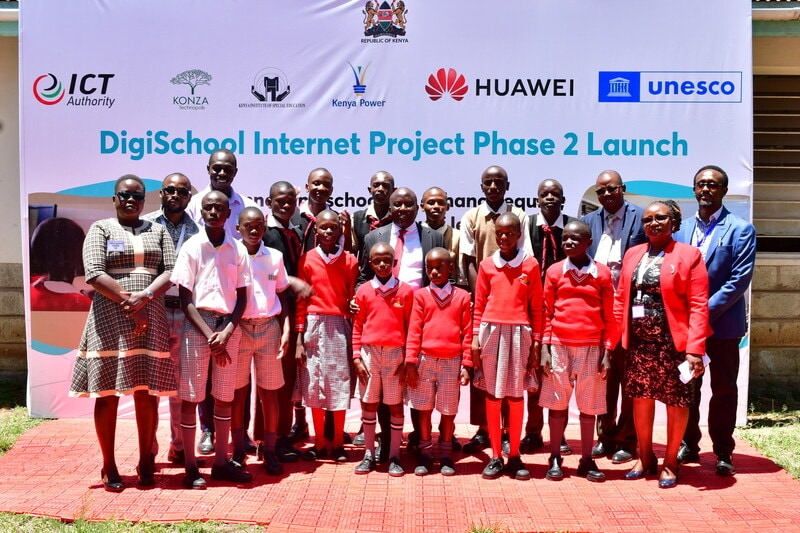
The Kenya DigiSchool Connectivity Project is a collaborative effort between Huawei, UNESCO, and Kenyan government agencies. The initiative has successfully completed its second phase as it brought internet access to 21 schools, including six institutions catering to children with special educational needs.
The Kenya DigiSchool Connectivity Project aligns with Kenya’s Digital Superhighway Agenda, which aims to bridge the digital divide and enhance educational outcomes through technology. At the heart of the project is the integration of high-speed fiber broadband and video conferencing solutions, which are particularly transformative for deaf students as they enable visual learning and remote support from experts at the Kenya Institute of Special Education (KISE).
The project’s impact was highlighted during an event at Machakos Primary School for the Deaf, where stakeholders witnessed firsthand how connectivity is revolutionizing classroom experiences.
Image Credit: Machakos Primary School for the Deaf
Key Themes Behind This Trend
- Digital Education Infrastructure
- The integration of high-speed fiber broadband in schools unlocks new educational possibilities by enabling uninterrupted access to online resources and interactive learning tools.
- Inclusive Learning Technologies
- Technologies like video conferencing specifically tailored for special education needs allow for personalized learning experiences and expert interaction from remote locations.
- Remote Expert Support Services
- Live video support from specialists offers students access to a broader range of expertise irrespective of geographical constraints.
Where This Applies
- Telecommunications
- Expansion of fiber broadband infrastructure provides opportunities for telecom companies to enter or extend their reach in educational sectors, adapting services to diverse user requirements.
- Educational Technology
- EdTech firms can innovate by developing tailored solutions for visually and audibly enhanced learning, creating tools that cater to specialized educational needs.
- Assistive Technology
- This industry can create adaptive technologies that support diverse learning methods, tapping into the growing demand for tools that facilitate inclusive digital education.