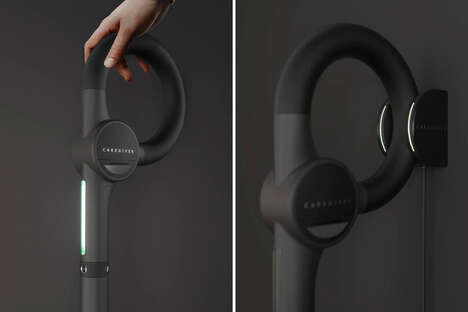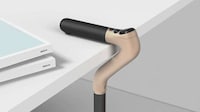
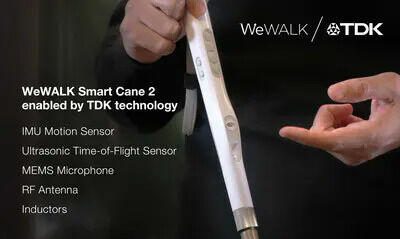
WeWALK has launched the Smart Cane 2, an advanced assistive device designed to enhance mobility for individuals who are visually impaired. The product is powered by TDK's cutting-edge sensor technologies, including its MEMS motion sensors, microphones, and ultrasonic sensors. Thanks to this tech-advanced composition, the Smart Cane 2 offers features like accurate navigation, real-time obstacle detection, and voice prompts.
The integration of multiple sensor solutions ensures a high level of reliability in various settings. The integration of TDK's MEMS sensors, for instance, ensures precise movement tracking and highly efficient performance with low power consumption. WeWALK's device is also equipped with an AI-powered voice assistant to help users in navigating both indoor and outdoor environments.
The WeWALK Smart Cane 2 also offers potential for broader adoption within the assistive technology market.
Image Credit: WeWALK
What's Driving This Trend
- AI-driven Assistive Devices
- The development of AI-powered devices such as WeWALK's Smart Cane 2 exemplifies how artificial intelligence can significantly improve accessibility tools for visually impaired individuals.
- Sensor Integration in Wearables
- The incorporation of MEMS motion sensors, microphones, and ultrasonic sensors in the Smart Cane 2 highlights a growing trend where advanced sensor technologies enhance the functionality of wearable assistive devices.
- Voice-activated Navigation Systems
- With the inclusion of an AI-powered voice assistant in the Smart Cane 2, there's potential for voice activation to become a standard feature in navigation systems designed for visually impaired users.
Who This Affects Most
- Assistive Technology
- The Smart Cane 2 underscores the potential for innovation in the assistive technology industry, leveraging AI and sensor tech to improve mobility solutions for the visually impaired.
- Wearable Technology
- The integration of multiple sensor types in the Smart Cane 2 points to disruptive advancements in the wearable technology industry, particularly in products that serve niche accessibility needs.
- Navigation Technology
- The emergence of AI and sensor-enhanced navigation solutions in products like the Smart Cane 2 suggests transformative potential within the navigation technology industry for specialized applications.