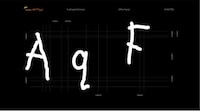
Harald Geisler is creating a Sigmund Freud font based on the famed psychologist's handwriting. If you've ever wanted to write like the great shrink, you will be able to soon.
Using eight samples of Freud's writing, Geisler hopes to construct a typeface that simulates his unique style. The samples stretch over a 50-year period from 1883 to 1938. With documents like scientific papers, letters and notes, the font has a great diversity of samples to draw from.
Handwriting can be hard to simulate in a typeface as the hand is inconsistent and fonts are a static collection of characters. Freud's handwriting will be simulated through multiple versions of the same character being used for different letter combinations. In addition, common letter combinations from English, Spanish, German and French will be included in the font.
Key Themes Behind This Trend
- Handwriting Simulation
- Creating typefaces that simulate handwriting opens up new possibilities for personalization and creativity in design.
- Historical Typeface Reconstruction
- Reconstructing typefaces based on historical documents offers a glimpse into the past and preserves cultural and intellectual heritage.
- Multilingual Typography
- Developing fonts that support multiple languages enables effective communication and global accessibility.
Where This Applies
- Graphic Design
- The graphic design industry can incorporate handwriting simulation typefaces to enhance branding, marketing materials, and user interfaces.
- Archiving and Preservation
- The field of archival and preservation can utilize historical typeface reconstruction to maintain and study significant cultural artifacts.
- Localization and Language Services
- The localization and language services industry can benefit from multilingual typography to provide accurate translations and tailored content for diverse audiences.