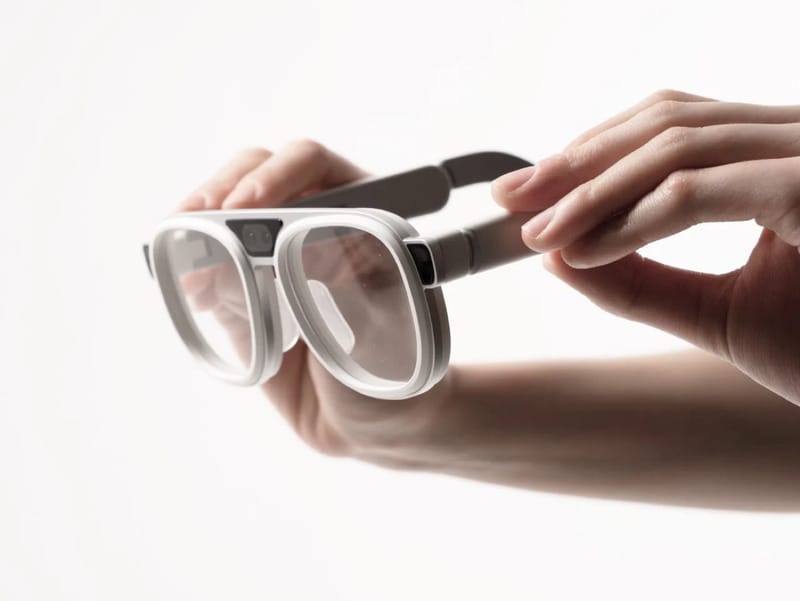
Sherpa’s AR glasses are an augmented-reality wearable system intended to assist drivers by overlaying driving information directly into their field of view. The glasses project digital content such as road sign interpretations, navigation cues, and dashboard icon meanings onto the wearer’s visual plane, reducing the need for drivers to shift focus from the road to visual displays. The system uses onboard sensors and external data feeds to interpret visual cues encountered while driving.
When active, the AR interface recognises road signs and translates them into simplified symbols or text prompts within the glasses’ display. Dashboard alerts and vehicle status indicators are also relayed through the interface so drivers can see information without glancing down. The glasses aim to support drivers with heightened situational awareness by presenting context-specific information in the line of sight.
Optical elements and display layers are calibrated to maintain transparency while presenting AR content. The glasses are paired with a companion device or smartphone to access mapping data and sensor inputs.
Image Credit: Yeongjun Yun, Jaeyun Lee
Key Themes Behind This Trend
- In-car Augmented Reality
- A persistent overlay of navigation and vehicle data within the driver’s line of sight creates opportunities to redefine human–vehicle interaction by shifting critical information from dashboards to eyewear.
- Contextual Road Sign Translation
- Real-time interpretation and simplification of road signs into standardized symbols could enable smoother cross-border driving experiences and reduce cognitive load in multilingual or unfamiliar regions.
- Sensor-fused Situational Awareness
- Combining onboard sensors with external data feeds to present context-specific alerts in real time offers potential to transform how situational threats and vehicle status are communicated to drivers.
Where This Applies
- Automotive Manufacturing
- Integrating AR eyewear with vehicle systems and sensor suites could redefine vehicle interfaces and create new product tiers centered on augmented driving experiences.
- Insurance and Risk Management
- Access to granular, timestamped driver-view data and AR-delivered warnings introduces novel models for assessing driver behavior and calibrating premiums based on contextual risk exposure.
- Smart City Infrastructure
- Standardized machine-readable signage and V2X data streams feeding AR devices could reshape urban traffic management and support infrastructure investments that prioritize digital-to-visual information delivery.