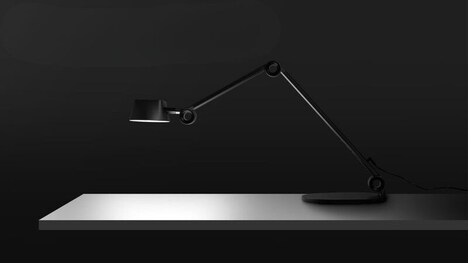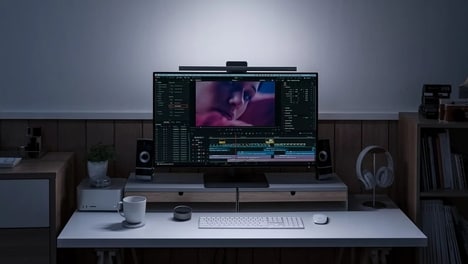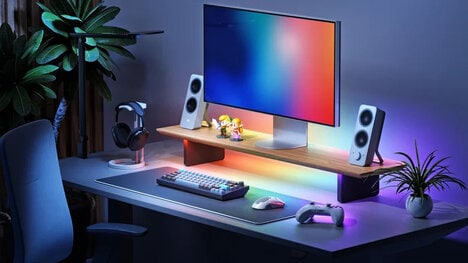

BenQ introduced the ScreenBar Max, a desk lamp and bias light designed for dual-monitor setups, featuring a large bar that stretches across two displays and an integrated mmWave presence sensor that turns the unit on as you sit. The company positions the product to deliver both screen-back bias lighting and task illumination in a single accessory.
The ScreenBar Max is priced at $289 with an optional $39 stand and installs with a twist-down C-clamp. It provides independent brightness control for bias light and desk lamp, a fixed 2,700–6,000 Kelvin temperature range, auto-dim to about 700 lux, a monitor-reading shortcut at 4,000K and studio-grade color metrics (Ra ≥95, Rf >96, Rg ~100).
For users, the ScreenBar Max reduces contrast-driven eye strain while also lighting keyboards and papers, and presence sensing adds hands-free convenience. Its high CRI and precise controls deliver neutral, flicker-free illumination, although the premium price may deter budget-minded buyers.
Image Credit: Max Miller for Engadget
Why This Trend Is Growing
- Dual-monitor Lighting
- Widescreen workstation accessories are evolving around multi-display habits, creating room for premium tools that combine ergonomic comfort, visual clarity, and space-saving design.
- Presence-sensing Desks
- Sensor-enabled office products are bringing ambient intelligence to everyday workspaces, where automatic activation and adaptive settings can make productivity hardware feel more seamless.
- Hybrid Bias Lamps
- Combined bias and task lighting reflects a shift toward multifunctional desk gear that supports eye comfort, video quality, and document visibility from one compact product.
Industries Being Reshaped
- Office Accessories
- Premium desktop add-ons are becoming more specialized for professional workflows, opening opportunities for high-margin products tailored to creators, analysts, and remote workers.
- Smart Lighting
- Adaptive illumination systems are moving beyond rooms into personal work zones, with integrated sensors and precision controls redefining expectations for task-specific lighting.
- Computer Hardware
- Monitor ecosystems increasingly extend into ergonomic peripherals, suggesting new value in accessories that enhance display usage rather than replacing core computing devices.