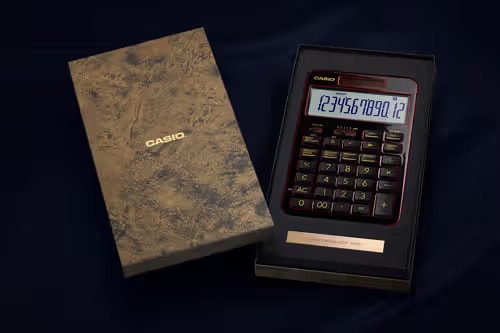
The Casio S100X calculator is a Made in Japan desktop model produced at the Yamagata Casio mother factory. The unit uses a milled aluminum alloy body finished with a traditional urushi lacquer coating applied by artisan Ryuji Umeda of Yamakyu Shitsuki. The surface is created using a Tamenuri technique, resulting in a glossy black finish with a subtle red tone visible along the edges.
The calculator features a pantograph key system with low-profile isolation keys designed to provide stable input and reduce key wobble. The display uses a high-contrast FSTN LCD with double-sided anti-reflective coating to improve visibility and reduce glare. Each unit includes a laser-engraved serial number and is presented in a black box with gold foil detailing. The model combines a standard 12-digit layout with premium materials and construction,
Image Credit: Casio
What's Driving This Trend
- Heritage Craftsmanship Meets Tech
- Blending traditional artisanal finishes with modern electronics suggests premium products that reframe perceived value through provenance and handcrafting.
- Luxury Office Accessories
- High-end materials and presentation elevate mundane desktop tools into status-driven lifestyle items that command higher margins and customer loyalty.
- Material-forward Industrial Design
- Prioritizing metals and specialty coatings indicates a shift toward tactile, durable design languages that differentiate products in saturated tech categories.
Who This Affects Most
- Consumer Electronics
- The infusion of artisanal finishes into electronic devices points to new subsegments where premium aesthetics justify limited runs and higher price points.
- Luxury Goods and Gifting
- Presentation-focused packaging and serial-numbered pieces reveal opportunities for collectible tech gifts that blend heritage craft with modern utility.
- Office Furnishings and Supplies
- Demand for elevated desktop items signals potential for curated office ecosystems that prioritize material quality and experiential details.