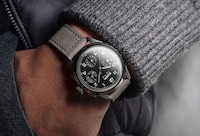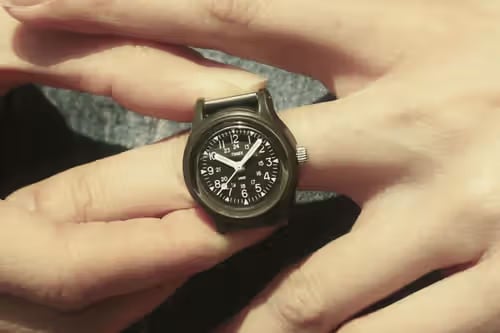
The BEAMS BOY x TIMEX Camper Ring Watch reinterprets the brand’s military-inspired Camper watch as a miniature wearable ring. The BEAMS BOY x TIMEX Camper Ring Watch was developed as a special anniversary collaboration that transforms the recognizable field-watch dial into a compact jewelry-style accessory worn on the finger. The design preserves the legible military-style face of the original Camper while housing a fully functional Japanese movement inside a significantly reduced case.
The watch uses a lightweight resin case paired with an acrylic crystal, maintaining the utilitarian material palette associated with the Camper line. A stainless steel expansion band forms the ring base, allowing the piece to stretch and fit finger sizes roughly between 9 and 15 without adjustable links. The minimalist three-hand display operates through a small crown positioned at the three o’clock mark
Image Credit: BEAMS
What's Driving This Trend
- Miniaturization of Functional Devices
- The condensation of full mechanical movements into ring-sized cases suggests new possibilities for embedding complete, high-performance mechanisms into traditionally ornamental form factors.
- Jewelry-tech Hybridization
- Combining timekeeping hardware with jewelry aesthetics points toward crossover products that blur the line between personal adornment and precision instrumentation.
- Utilitarian Aesthetics in Fashion
- The retention of military-inspired legibility and durable materials in a fashion accessory signals demand for pragmatic design language within luxury and mass-market categories.
Who This Affects Most
- Watchmaking
- Micro-engineering of reliable movements for ultra-small cases could upend conventional product tiers by offering fully functional timepieces in novel wearable formats.
- Jewelry and Accessories
- Incorporating mechanical functionality into rings and bracelets opens avenues for differentiated product lines that merge heirloom-quality craftsmanship with everyday utility.
- Wearable Technology
- The move toward non-electronic, design-forward wearables indicates room for hybrid devices that prioritize tactile mechanics and aesthetic integration over screen-based interfaces.