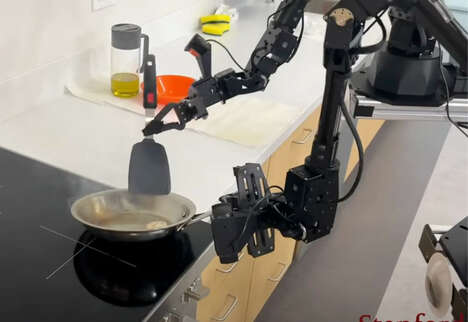
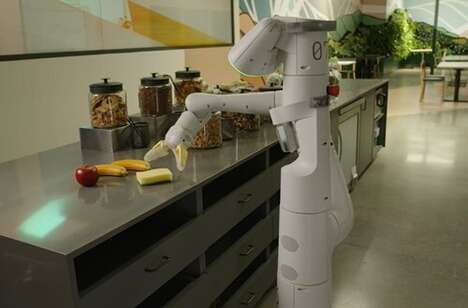
In an age where technology reigns supreme, scientists have now created a robot that can think on its own. “Adam” can perform over 1,000 scientific tasks every day without any human input. From starting an experiment by formulating an hypothesis to analyzing its own data, this autonomous machine will decide what experiment to do next.
This steadfast techno-drift was made famous by author and master of the sci-fi genre Issac Asimov, who was famous for his "Robot Series" novels and "The Three Laws of Robotics."
Beyond Hollywood’s wild and imaginative movies like "Terminator" and "I, Robot," take heed as this inclination towards artificial life creeps deeper into the human realm.
What's Driving This Trend
- Autonomous Scientific Research
- The development of robots like 'Adam' paves the way for autonomous scientific research, allowing for the completion of multiple tasks without human input.
- Machine Learning in Experimentation
- By analyzing its own data and formulating new hypotheses, robots like 'Adam' are pushing the boundaries of machine learning in scientific experimentation.
- Technology's Impact on Scientific Discovery
- The creation of autonomous robots like 'Adam' highlights the increasing impact of technology in scientific discovery, revolutionizing the way experiments are conducted.
Who This Affects Most
- Artificial Intelligence
- The field of artificial intelligence can benefit from the development of autonomous robots like 'Adam', as they demonstrate the capabilities of machine learning and autonomous decision-making.
- Robotics
- The robotics industry can leverage the advancements made in creating autonomous robots like 'Adam', opening up new opportunities for research and development.
- Scientific Research
- The scientific research industry can explore the possibilities offered by autonomous robots like 'Adam' to enhance productivity and efficiency in conducting experiments.