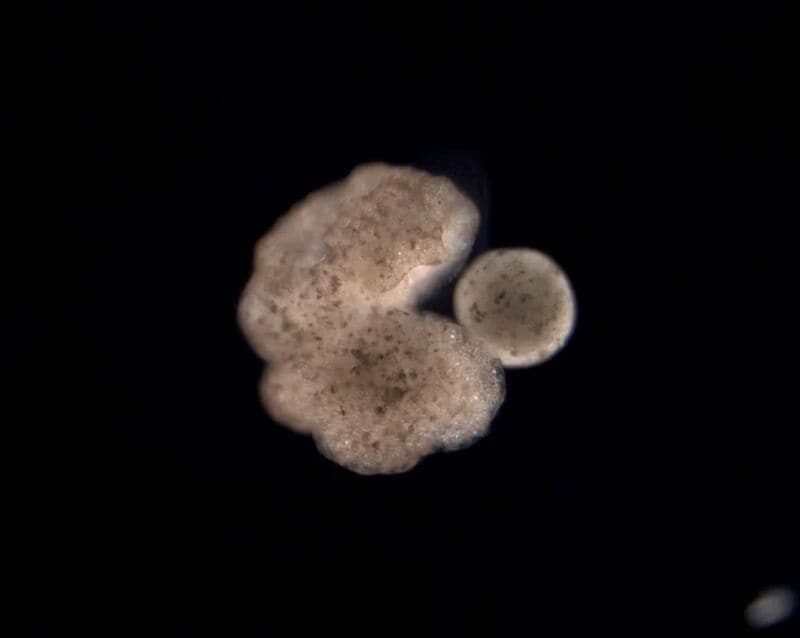
The world welcomes the first living robots capable of reproducing and generating offspring, dubbed the Xenobots 3.0. Researchers from Tufts University created the programmable organisms last year using stem cells from grog embryos.
This year, the project takes on a new scientific breakthrough through combinations of AI-optimized configurations. The robots can spontaneously self-replicate when the Xenobots 3.0 is formed into the right shape -- similar to that of the Pac-Man video game character.
The groundbreaking discovery is made possible with the kinematic replication method, which sees the parent Xenobots gather up frog stem cells in a poetry dish using their V-shaped "mouthes." The robots bundle the cells into a larger cell cluster that becomes a baby Xenobot.
Image Credit: Tufts University
Why This Trend Is Growing
- Self-replicating Living Robots
- With the Xenobots 3.0, the trend of artificial organisms capable of reproducing themselves will continue to gain momentum, presenting opportunities for the development of self-replicating machinery in several industries.
- Programmable Organisms
- With the breakthrough discovery of the Xenobots 3.0, this trend of creating programmable organisms using stem cells could revolutionize the field of biotechnology, enabling the development of new treatments and drug delivery mechanisms.
- Kinematic Replication Method
- The use of the kinematic replication method to create the Xenobots 3.0 presents a promising trend in the development of new health, environment, and safety solutions.
Industries Being Reshaped
- Biotechnology
- The Xenobots 3.0 Programmable Organisms trend presents an opportunity for the biotechnology industry to enhance drug delivery systems and develop new treatments using synthetic biology.
- Manufacturing
- The trend of Self-Replicating Living Robots could disrupt the manufacturing industry to reduce waste and increase efficiency by automating the production of goods without human intervention.
- Environmental Preservation
- The Kinematic Replication Method trend could disrupt industries involved in environmental preservation by enabling the development of robot cleanup crews that can safely remove pollutants and consume waste.