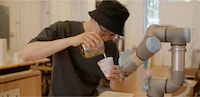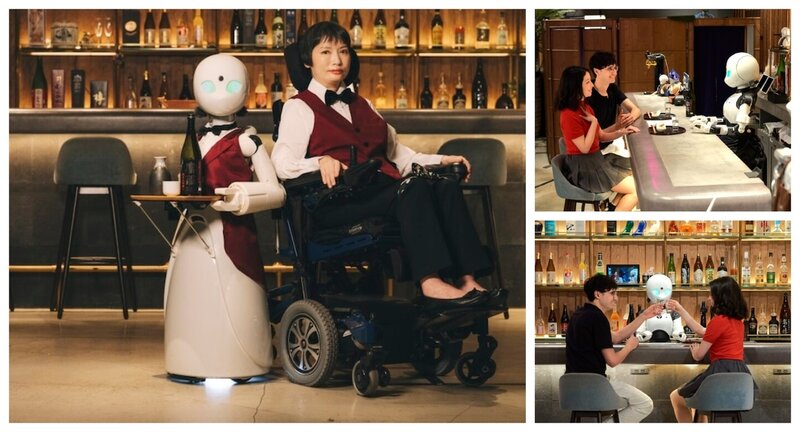
OryLab's OrySnack lets bartenders serve guests from home instead of commuting, turning a Tokyo snack bar into a more accessible workplace. At the venue, six small humanoid OriHime robots stand behind the counter, pouring drinks and chatting with customers as remote pilots guide them.
One pilot, Guro, was born with FSHD, a genetic muscle disorder that gradually weakens muscles. Sending her presence through a robot makes bar work possible for people whose health or disability can make a standard commute difficult. Customers still get a live conversation at the counter, even when the person serving them is far away.
For retailers, the idea opens hospitality roles to people who cannot easily travel to a shift without stripping out the social exchange that defines a bar visit. Accessibility becomes part of the service model itself, not a separate accommodation layered on later.
Image Credit: OryLab
What Makes This Trend Stand Out
- Remote Hospitality Labor
- Telepresence service models expand customer-facing work to people beyond commuting distance while preserving live social interaction in bars, cafés, and retail venues.
- Accessible Service Design
- Embedding accessibility into the core operating model creates new labor participation pathways and differentiated guest experiences rather than treating inclusion as an add-on.
- Robot-mediated Social Spaces
- Small humanoid robots enable physical venues to host real-time human conversations through remote bodies, blending automation infrastructure with authentic interpersonal service.
Sectors Adopting This
- Hospitality
- Bars and restaurants can reconfigure staffing around remote pilots, widening talent access while maintaining the conversational rituals that drive repeat visits.
- Retail Technology
- Teleoperated robotics platforms offer retailers a way to combine inclusive employment, in-store presence, and scalable service coverage across physical locations.
- Assistive Technology
- Robotic embodiment systems extend workplace accessibility for people with disabilities or health constraints, creating new commercial applications beyond medical support.