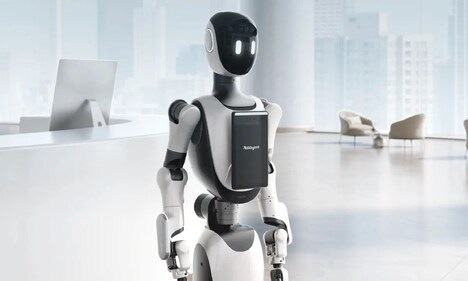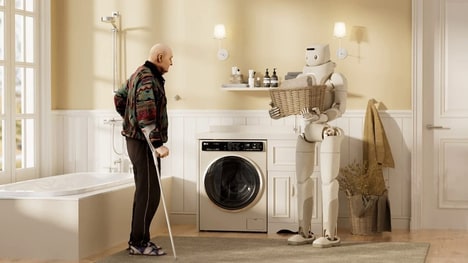
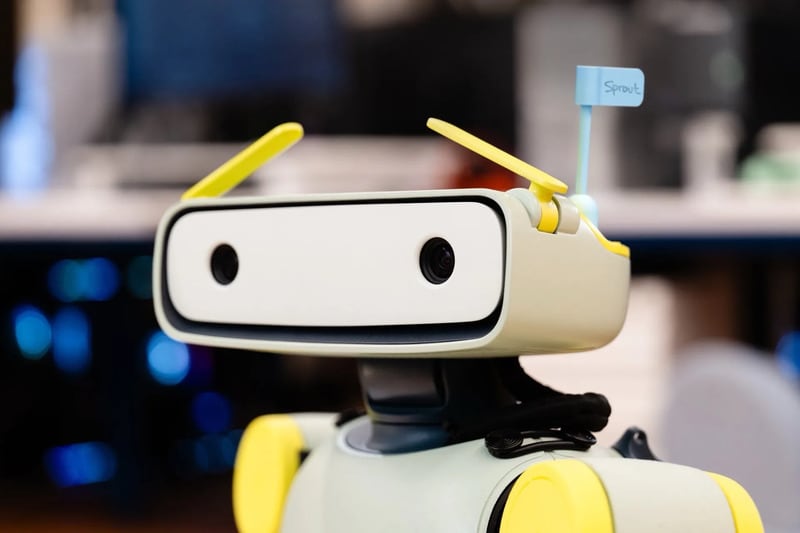
Fauna has introduced Sprout, a compact humanoid robot designed to work in customer-facing environments rather than industrial warehouses. Roughly the size of a young child, Sprout is positioned for roles in hotels, shops, and restaurants, where it can perform simple service tasks like delivering items to guests. The model is priced from $50,000 and emphasizes being approachable, lightweight, and safe to operate around people.
Beyond hospitality, Sprout has been adopted by early customers such as Disney and Boston Dynamics for entertainment and research applications. The robot ships with software libraries that enable environmental scanning, autonomous walking, access to language models, and built-in teleoperation controls. It also features expressive mechanical eyebrows to support human–robot interaction and proprietary balance-recovery technology to help it stabilize after stumbles.
For consumers, Sprout signals a shift toward humanoid robots enhancing everyday experiences in public venues rather than staying hidden in factories. Hotels and attractions can use the system to offer responsive, on-demand assistance that feels more character-like and less mechanical. Its research-ready software and human-centric design reflect a broader trend toward socially capable robotics that fit naturally into service, learning, and entertainment contexts.
Image Credit: Fauna
Key Themes Behind This Trend
- Socially Capable Robotics
- A growing focus in robotics is the development of machines designed to interact seamlessly with humans in public spaces, emphasizing natural social integration and customer engagement.
- Humanoid Robots in Hospitality
- The hospitality sector sees disruption with humanoid robots like Sprout, which are revolutionizing customer service by adding a personable and approachable dimension to interactions.
- Expressive Robotics
- Innovations like expressive mechanical features in robots represent a trend where machines are becoming more relatable and expressive, enhancing human-robot communication and comfort.
Where This Applies
- Hospitality
- The introduction of robots in hotels and restaurants creates opportunities for more efficient service delivery while providing unique, advanced guest experiences.
- Entertainment
- Robots like Sprout offer new avenues for entertainment companies, combining interactive technology with character-driven experiences to engage audiences in novel ways.
- Robotics Research
- Investments in research-grade robotics platforms push the boundaries of autonomous machine capabilities, fostering cross-industry applications from service roles to cutting-edge technological experimentation.