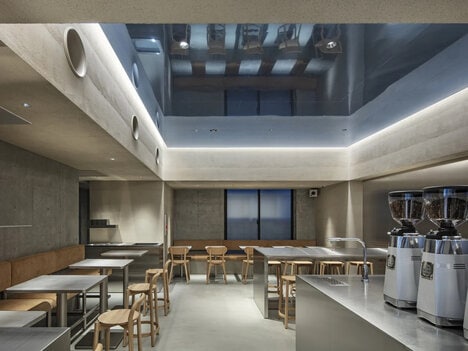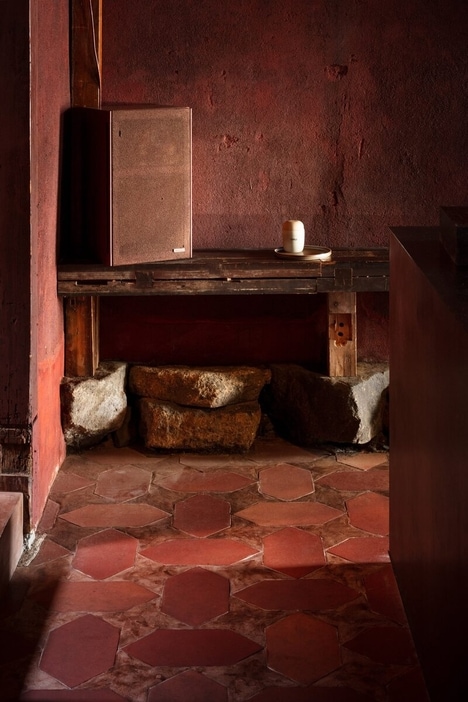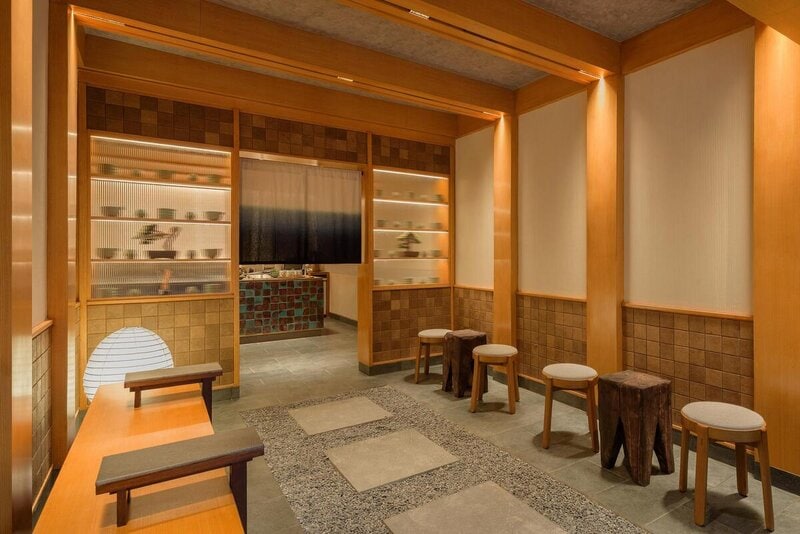
Ritualistic matcha cafés are transforming tea preparation into an immersive hospitality experience, as demonstrated by Jun Matcha Club in South Jakarta. Located within a former residential garage, the café uses a carefully sequenced interior to encourage a slower approach to ordering, preparation and consumption. Its matcha bar serves as the focal point, complemented by locally sourced lava stone, banana-fiber paper, recycled coffee-ground wall panels, bamboo furniture and handcrafted teak stools created by Indonesian makers.
For Jun Matcha Club, integrating local craftsmanship with matcha rituals creates a distinctive identity in a neighborhood increasingly populated by independent cafés and restaurants. The approach demonstrates how hospitality businesses can differentiate themselves through atmosphere and material storytelling rather than relying solely on menus. Supporting regional makers and repurposing existing spaces can also strengthen local connections, while experiential interiors may encourage customers to view cafés as destinations for cultural and social engagement.
Image Credit: Jun Matcha Club
Key Themes Behind This Trend
- Ritualized Beverage Spaces
- Hospitality brands are turning drink preparation into slow, sensory ceremonies that differentiate venues through atmosphere, pacing and participation.
- Material Storytelling Interiors
- Locally sourced, recycled and handcrafted materials are becoming identity-building tools for cafés seeking deeper cultural resonance beyond menu innovation.
- Adaptive Micro-hospitality
- Former garages and compact residential spaces are being reimagined as destination venues that blend neighborhood intimacy with experiential design.
Where This Applies
- Café Hospitality
- Independent cafés can stand out in crowded dining districts by centering service around immersive rituals, spatial sequencing and social engagement.
- Interior Design
- Design studios have growing opportunities to create hospitality environments where sustainable materials and local craft define the customer experience.
- Artisan Manufacturing
- Regional makers can gain visibility through collaborations that place handcrafted furniture, finishes and décor at the center of branded spaces.