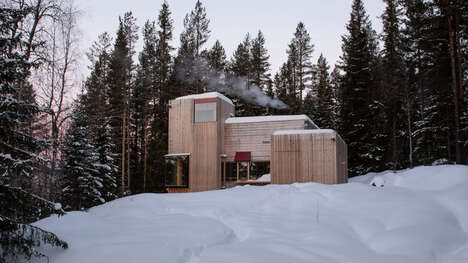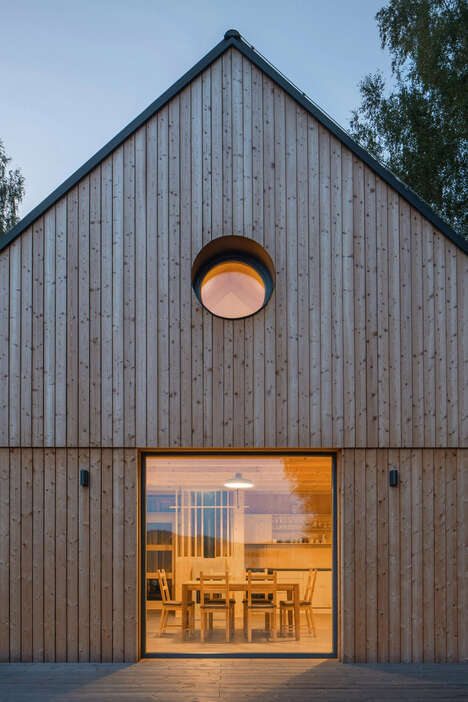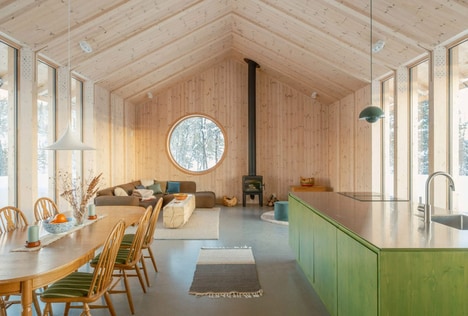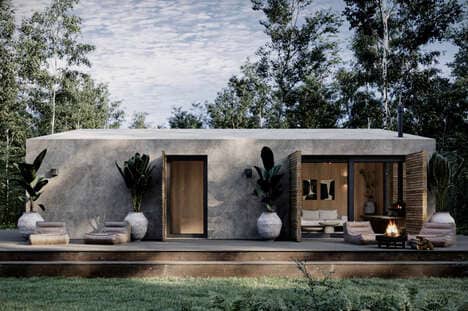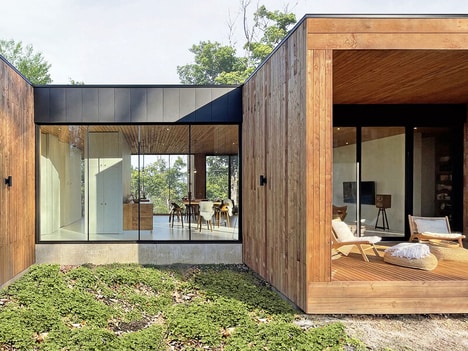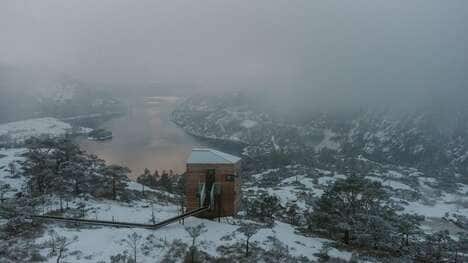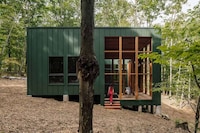

Reiulf Ramstad Arkitekter recently unveiled new sustainable cabins in a French mountain village. Designed to be ultra-slender, the cabins aim to blend into the landscape "like boulders on a slope." WIth 14 in total, these cabins take after "hyttes," which are small countryside cottages found scattered across Norway. The landscape architect, Leroy-Jönsson, explained his purpose for creating the structures was to give guests a rustic retreat.
"It is the meeting of my two passions, my two cultures; nature and architecture, Denmark and Alsace," said Leroy-Jönsson. "I imagined a space of freedom, open and intimate, where everyone can enjoy the calm of nature. I have created a place to live, simple and friendly, where everyone takes the time to live in a setting of only 14 hytte. More than a hotel, it is a universe."
Image Credit: Reiulf Ramstad Arkitekter
Key Themes Behind This Trend
- Sustainable Cabin Design
- Designing cabins that can blend with nature, be sustainable and also give people a rustic retreat.
- Ultra-slenderized Cabins
- Designing slim-space cabins that provide friendly and comfortable spaces without taking away the natural feel of a place.
- Eco-friendly Accommodation
- Providing eco-friendly accommodation options that can help travelers connect with nature in a comfortable and sustainable way.
Where This Applies
- Eco-tourism
- Eco-tourism industry has opportunities to leverage eco-sustainable and slenderizing cabin designs for a unique accommodation experience.
- Architecture
- Opportunities in the architecture industry include designing more adaptable and eco-sensitive buildings that can provide sustainable living spaces for people.
- Landscape Architecture
- Landscape architects have opportunities to create sustainable and eco-friendly living spaces that blend with nature to provide people with a refreshing and natural atmosphere.