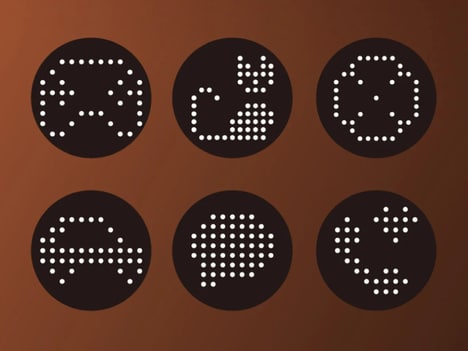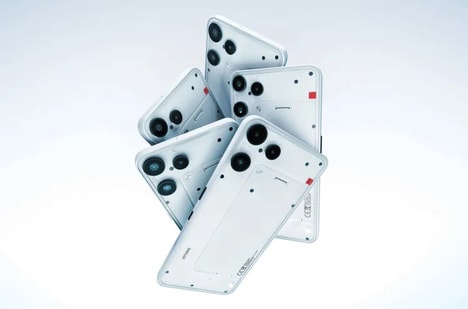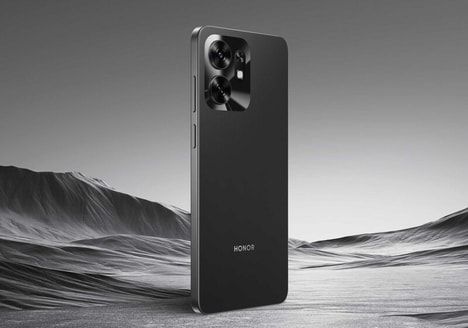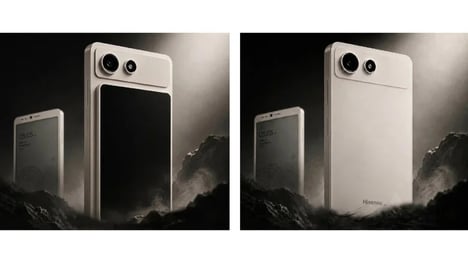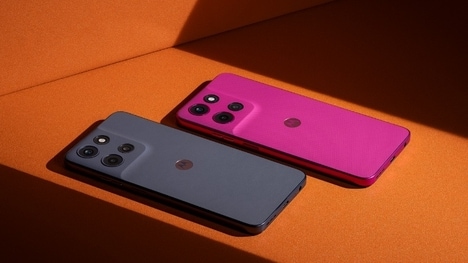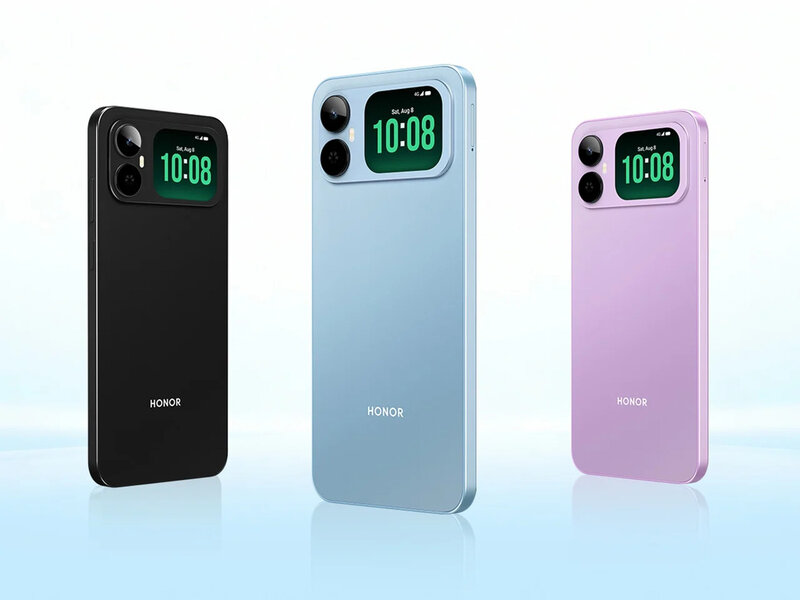
Honor's Play20A is an entry-level 4G phone that puts a small secondary display into the camera module, pairing that rear screen with a 6.9-inch main panel and a 6,000mAh battery. The rear display shows the time, incoming call details and what's playing, and it doubles as a viewfinder to frame shots using the 13MP rear camera instead of the 5MP front sensor.
The phone's main screen is an IPS LCD with 90Hz refresh at an HD+ 1600×720 resolution and slim bezels around a waterdrop notch. Hardware includes a MediaTek Helio G81 chipset, 4GB of RAM, up to 128GB storage expandable to 1TB, a single 13MP rear lens and 15W USB-C charging for the large battery.
Those features let buyers control music and calls from the back and take photos using the better rear lens rather than the weaker front sensor. The 90Hz panel and big battery aim to make everyday scrolling and endurance more comfortable, while the rear display brings a typically premium trick to a budget handset.
Image Credit: Honor
What Makes This Trend Stand Out
- Rear-display Phones
- Secondary screens on low-cost handsets create differentiation through quick-glance controls, camera previews and premium-style interactions at entry-level prices.
- Budget Premiumization
- Affordable devices are absorbing flagship-inspired features such as auxiliary displays and high-refresh screens, reshaping consumer expectations in value tiers.
- Rear-camera Selfies
- Using rear displays as viewfinders elevates selfie quality by shifting users from weaker front cameras to stronger rear sensors without adding expensive imaging hardware.
Sectors Adopting This
- Mobile Devices
- Smartphone makers can redefine entry-level product design by blending utility-focused hardware additions with cost-conscious specifications.
- Consumer Electronics
- Feature migration from premium gadgets into budget electronics signals new competition around accessible convenience rather than raw performance alone.
- Mobile Photography
- Compact display integration around camera modules expands everyday imaging use cases by making higher-quality rear-camera capture easier for casual users.