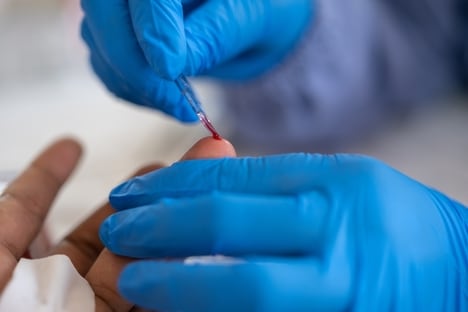

MeMed Key demonstrates how rapid infection diagnostic platforms can help clinicians distinguish bacterial infections from viral illnesses without relying on conventional laboratory setups. Developed through a collaboration between MeMed and Invetech, the compact system automates complex immunoassay testing, which analyzes biological responses to support medical decisions closer to patients.
The platform supports MeMed's FDA-cleared BV test, which interprets immune system signals to differentiate infection types in 15 minutes. Invetech contributed instrument engineering, cartridge development, software, and manufacturing expertise. Its integrated design recently earned a 2026 Gold Good Design Award for Engineering Design.
For healthcare providers, the smaller testing system offers opportunities to simplify diagnostic workflows and make timely treatment decisions. The recognition also strengthens MeMed and Invetech's commercial positioning, highlighting how practical device design can support broader adoption of sophisticated clinical testing technologies.
Image Credit: MeMed Key
What's Driving This Trend
- Rapid Point-of-care Diagnostics
- Compact testing platforms are shifting complex lab processes closer to patients, creating room for faster clinical decision-making and decentralized care models.
- Immune Response Testing
- Biomarker-based interpretation of host immune signals is enabling more precise infection classification, reducing dependence on symptom-based prescribing and conventional cultures.
- Automated Cartridge Systems
- Integrated cartridges and software-driven instruments are simplifying immunoassay workflows, opening pathways for scalable diagnostics in urgent care, primary care, and hospital settings.
Who This Affects Most
- Medical Devices
- Miniaturized diagnostic hardware with automated sample processing is expanding the role of device makers in delivering lab-quality results outside centralized facilities.
- Clinical Diagnostics
- Rapid bacterial-versus-viral testing is reshaping diagnostic service models by supporting targeted treatment decisions within minutes rather than days.
- Healthcare Technology
- Connected software, instrument engineering, and assay automation are converging to make sophisticated clinical testing more accessible across distributed care environments.