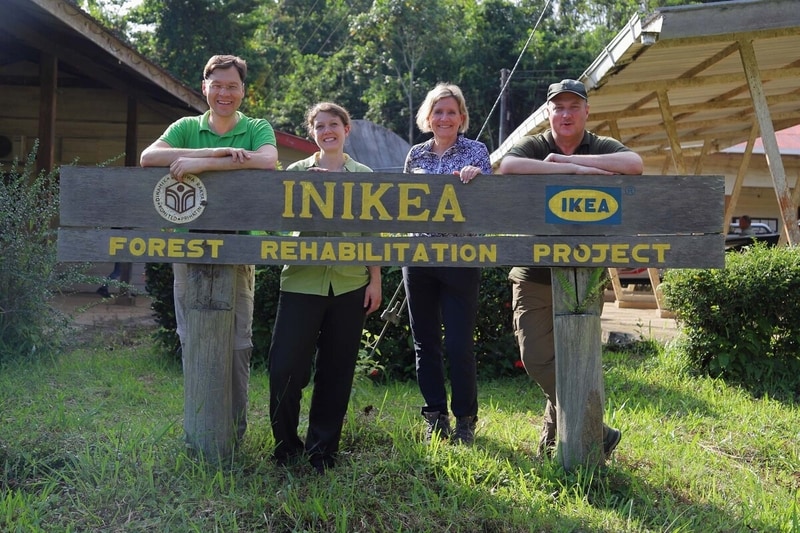
IKEA has continued its partnership with the Swedish University of Agricultural Sciences and the Sabah Foundation to launch the Living Rainforest Restoration Lab, a 10-year research program built on 25 years of IKEA's rainforest restoration work in Borneo. The initiative has restored 18,500 hectares of land previously degraded by fire and logging, with five million trees planted across 90 species.
The lab brings together 24 active research projects aimed at turning decades of field experience into scalable restoration methods. Wildlife, including orangutans, elephants and clouded leopards, has returned to the restored area, which now spans an area larger than Paris.
As corporations face growing pressure to move beyond basic carbon pledges, IKEA has shown how long-term environmental commitments can evolve into platforms for applied biodiversity research with broader restoration potential.
Image Credit: IKEA
Key Themes Behind This Trend
- Corporate Restoration Labs
- Long-term conservation investments are evolving into research infrastructure where corporations generate scalable methods for repairing degraded ecosystems.
- Biodiversity-backed Climate Strategy
- The return of wildlife to restored landscapes signals a shift from carbon-only commitments toward measurable ecological resilience and habitat regeneration.
- Applied Nature Research
- Field-tested restoration data is gaining value as a foundation for commercial tools, public-private partnerships and science-led sustainability models.
Where This Applies
- Forestry
- Restored forests are becoming living testbeds for resilient planting strategies, species diversity planning and regenerative land management systems.
- Furniture
- Large resource-dependent brands have emerging pathways to connect sourcing credibility with measurable ecosystem recovery and biodiversity stewardship.
- Environmental Services
- Demand for restoration expertise is expanding around monitoring, ecosystem design, biodiversity measurement and long-horizon impact verification.