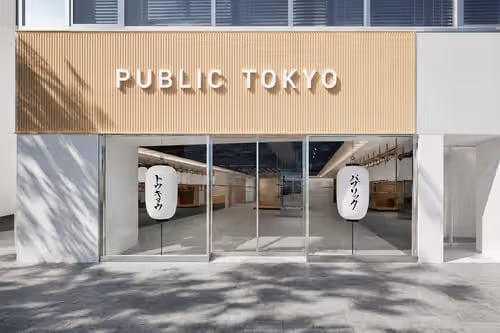
PUBLIC TOKYO Jingumae Flagship Store is the brand's first standalone flagship location in Jingumae, Shibuya. The 300-square-meter store is located along Meiji-dori. The interior references traditional Japanese shrines through a central structure inspired by a shaden. Contemporary interpretations of kagura bells, saisen boxes, lattices, and lanterns define the space. Wood-inspired finishes and washi paper-inspired materials emphasize Japanese craftsmanship and reinforce the store's design concept.
The new store opening includes exclusive limited-edition apparel made from linen-like polyester blends. The material combines a natural texture with wrinkle resistance and stretch. Featured pieces include the Butcher Linen Drawstring Shirt with Drape Easy Pants and the Kimono Sleeve Tee with Triple-Tuck Wide Pants. The men's and women's collections reinterpret traditional Japanese garments for everyday wear.
Image Credit: PUBLIC TOKYO
Why This Trend Is Growing
- Craft-coded Flagships
- Retail environments rooted in regional rituals and architectural symbolism create differentiated brand worlds where cultural heritage becomes a premium experiential asset.
- Modern Kimono Silhouettes
- Everyday apparel that reinterprets traditional garment shapes signals potential for hybrid wardrobes blending cultural identity, comfort, and contemporary utility.
- Performance Natural Textures
- Synthetic textiles with linen-like tactility, stretch, and wrinkle resistance reveal a growing space for materials that preserve artisanal aesthetics while improving wearability.
Industries Being Reshaped
- Fashion Retail
- Standalone flagship stores with immersive cultural narratives are reshaping physical retail into a destination format that competes through meaning, exclusivity, and spatial storytelling.
- Textile Manufacturing
- Advanced polyester blends that mimic natural fibers point to material innovation opportunities around low-maintenance fabrics with elevated sensory and visual qualities.
- Interior Design
- Contemporary adaptations of shrine-inspired elements, washi-like surfaces, and wood finishes demonstrate how commercial interiors can translate heritage motifs into modern brand architecture.