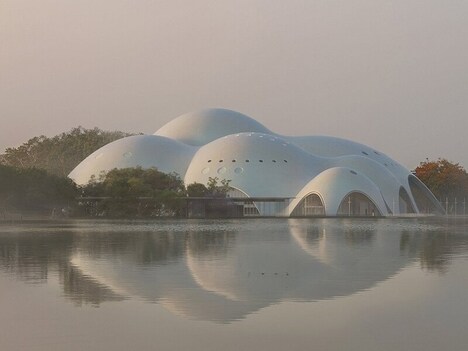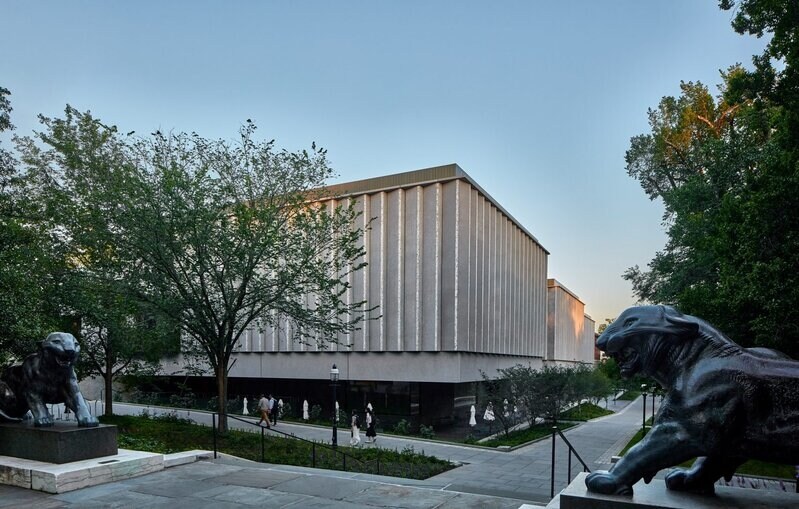
Princeton University Art Museum by Adjaye Associates redefines art on campus, introducing a 146,000-square-foot building that merges education, architecture, and community. The structure is composed of nine interlocking pavilions, creating a rhythm of open and enclosed spaces that allow for both expansive exhibitions and intimate reflection. The design prioritizes accessibility and flow, with most galleries located on a single level to enhance navigation through the museum’s extensive collection. Natural light enters through skylights and carefully positioned apertures, softening transitions between interior and exterior.
Material choices balance modern clarity with historic resonance. Board-marked concrete, oak, and bronze details echo the surrounding campus architecture without replicating it. The project establishes a new model for academic museums, one where art is experienced as an evolving conversation rather than a static display. By combining spatial harmony with intellectual intent, the museum invites discovery through every turn.
Image Credit: Richard Barnes
What's Driving This Trend
- Educational Architecture Fusion
- The trend of integrating educational spaces with architectural innovation offers new ways for institutions to create engaging and accessible learning environments.
- Dynamic Exhibition Design
- Emerging exhibition designs that focus on open and enclosed spaces are transforming how art is curated and experienced within academic settings.
- Sustainable Material Integration
- The use of materials that blend modern innovation with historical resonance opens up possibilities for sustainable design in educational structures.
Who This Affects Most
- Architecture and Design
- Architectural firms have opportunities to explore the integration of modern design with historical elements in educational settings like universities.
- Museum and Exhibition Management
- The museum sector can leverage innovative spatial layouts and designs to enhance visitor engagement and educational outcomes.
- Higher Education
- Universities can adopt new architectural and design models to create multi-functional spaces that enrich the educational and cultural experience on campus.