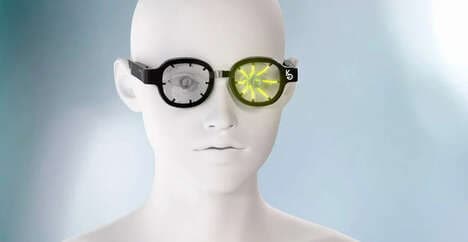
What's the best way to study a praying mantis' ability to see in 3D? By fitting it with a pair of 3D glasses of course! Scientists at Britain's Newcastle University developed the smallest pair of 3D glasses ever made to study the insects' 3D vision abilities and see if they could be of use in human technologies.
The tiny 3D glasses were placed in front of the praying mantis' eyes using beeswax as an adhesive. The mantises were then held in front of a computer screen, on which moving 3D targets were displayed. By studying the praying mantis' reactions to the stimuli, scientists can figure out if they process 3D imagery the same way humans do.
This knowledge will aid the development of human technologies involving robotic vision.
Key Themes Behind This Trend
- 3D Vision Research
- Studying the way praying mantises process 3D imagery could lead to breakthroughs in human technologies involving robotic vision.
- Miniaturized 3D Glasses
- The development of the world's smallest 3D glasses opens up opportunities for miniaturized technology in various industries.
- Biomimicry in Technology
- By understanding how praying mantises see in 3D, scientists can explore biomimicry in the development of futuristic technologies.
Where This Applies
- Technology
- The findings from studying 3D vision in praying mantises can be applied to the development of advanced robotics and virtual reality technologies.
- Biomedical
- The use of miniaturized 3D glasses and studying insect vision could have implications for biomedical imaging and surgical technology.
- Entertainment
- Miniaturized 3D glasses could revolutionize the virtual reality and gaming industries, providing a more immersive visual experience.