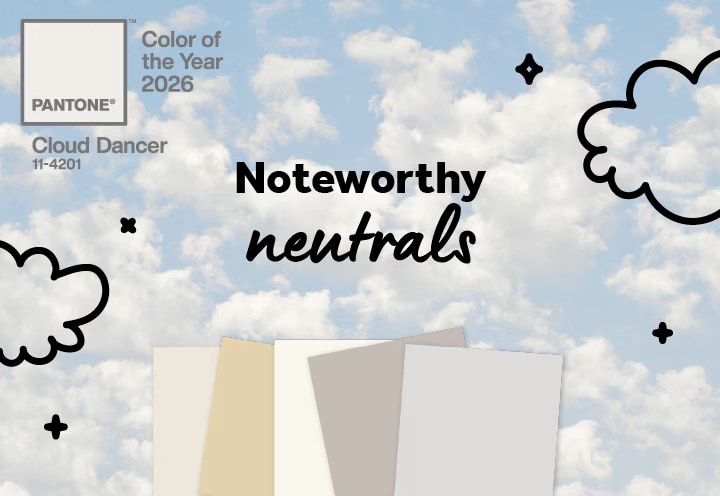
Pantone has announced Cloud Dancer, a balanced white, as the 2026 Color of the Year, and this “symbol of calming influence in a frenetic society” has already inspired several collaborations, including Post-it x Pantone. For the first time, Post-it will be introducing the Pantone Color of the Year 2026, as part of a new Post-it Color Collection. Cloud Dancer is the highlight of the Neutrality Collection, which launches in spring 2026 to celebrate earthy, natural colors that align with a collective desire for simplicity, comfort, and a fresh start.
While the brand is known for its vibrantly colored sticky notes, Post-it’s upcoming collection embraces a new direction centered on clarity and focus. This softer backdrop still supports ideas, organization, and creativity, just with a cleaner canvas that lets thoughts take center stage.
Key Themes Behind This Trend
- Embracing Neutrality
- A shift towards neutral color palettes in office supplies suggests a growing tendency to seek tranquility and simplicity in workspace environments.
- Color Psychology in Product Design
- Utilizing calming colors like Pantone's Cloud Dancer in everyday products reflects an increasing acknowledgment of the psychological impact of design choices on productivity and well-being.
- Collaborative Color Collections
- Collaborations between color authorities and consumer brands, such as Post-it and Pantone, highlight the potential for co-branded collections that capitalize on industry expertise and consumer appeal.
Where This Applies
- Office Supplies
- The office supply industry can explore new design directions focusing on products that promote peace and concentration, tapping into market demand for mental wellness.
- Home Decor
- Home decor brands are positioned to innovate by incorporating calming color palettes that reflect popular trends towards serenity and minimalism.
- Fashion and Accessories
- Fashion and accessory industries can benefit from introducing collections that feature the color of the year, tapping into trend-setting opportunities and consumer interest in color symbolism.