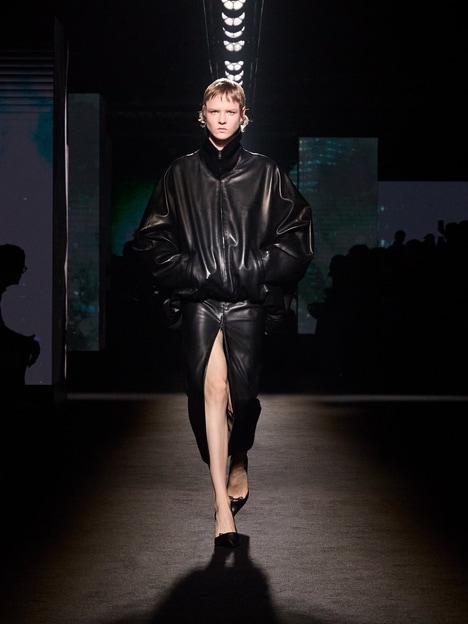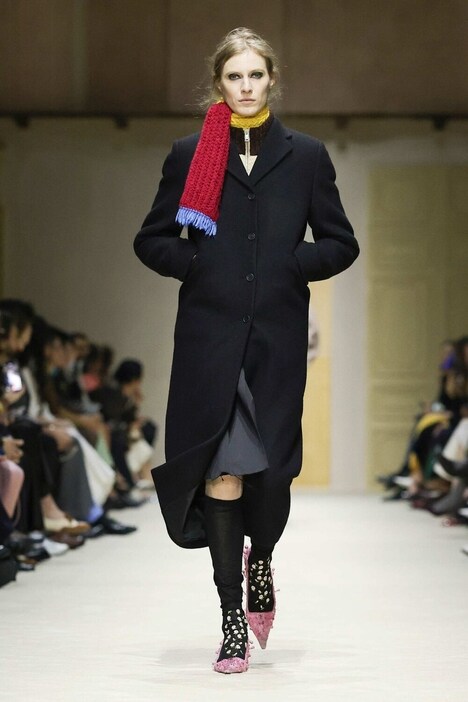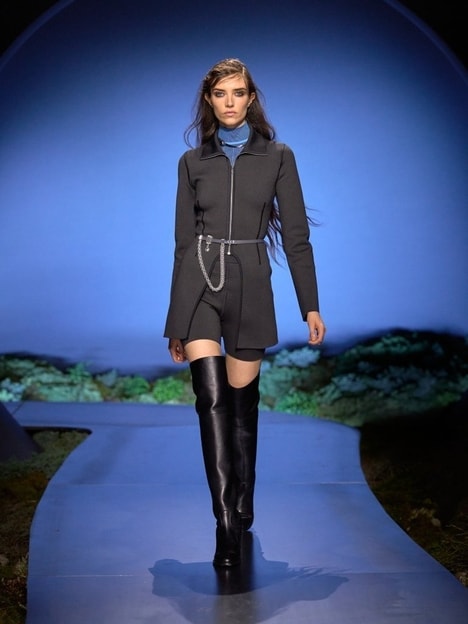
Maison Margiela embraces porcelain doll-inspired aesthetics, fragmented tapestries, and distressed dresses left too fragile for conventional repair in its Fall 2026 collection. The garments were presented during a runway show in Shanghai. It featured the brand's ready-to-wear and Artisanal lines.
Maison Margiela's porcelain doll-inspired collection incorporated Edwardian silhouettes with high necklines, exaggerated sleeves, lace details, and elongated hemlines, while foundational house codes appeared throughout — from the second skin garments and the bianchetto white painted finishes to the bonded fabric fusions and the anonymous masks worn by every model.
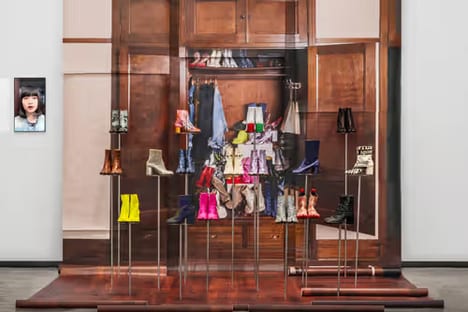
Maison Margiela's Fall 2026 presentation also boasted new footwear silhouettes like the Level Cut-Out boots with the front portion entirely removed to reveal the foot and leather lining, heel-less pumps and cowboy boots, Perspex sandals with transparent straps, Tabi ballerinas in second skin material, and Tabi-claw boots mounted on stiletto heels.
Image Credit: Maison Margiela
What Makes This Trend Stand Out
- Porcelain Doll Revival
- A resurgence of Edwardian-inspired, porcelain-doll aesthetics applied to contemporary ready-to-wear signals a shift toward collectible, narrative-driven luxury pieces that blur fashion and objecthood.
- Fragile-repair Aesthetic
- Deliberately distressed garments left 'too fragile' for conventional mending indicate a new aesthetic category where fragility becomes a value driver for provenance, conservation services, and serialized scarcity.
- Experimental Footwear Silhouettes
- Radical boot and shoe deconstructions — heel-less pumps, cut-out fronts, Perspex straps, and stiletto-mounted claw platforms — point to footwear as a site for form-driven novelty and high-tech structural reinvention.
Sectors Adopting This
- Luxury Fashion
- Maison Margiela’s fusion of archival codes and avant-garde motifs suggests expanded markets for limited-edition artisanal lines, brand-led conservation offerings, and storytelling-driven resale ecosystems.
- Materials and Textile Innovation
- Bonded fabric fusions, second-skin materials, and finishes like bianchetto white create demand for novel composites, repair-compatible fibers, and reversible or preservation-grade textile technologies.
- Footwear and Accessory Manufacturing
- The introduction of unconventional constructions and transparent elements anticipates opportunities for new tooling, modular component systems, and engineered supports tailored to non-traditional silhouettes.