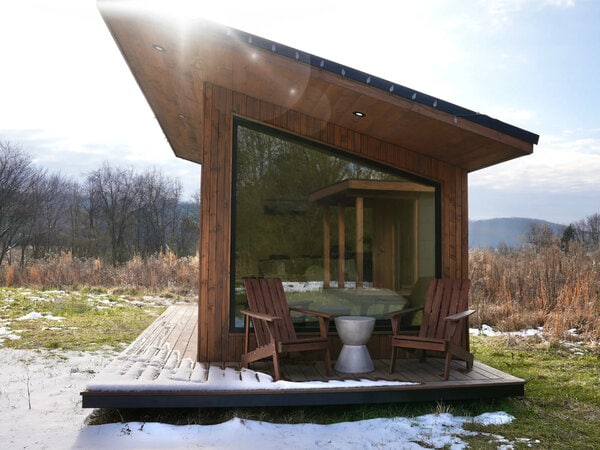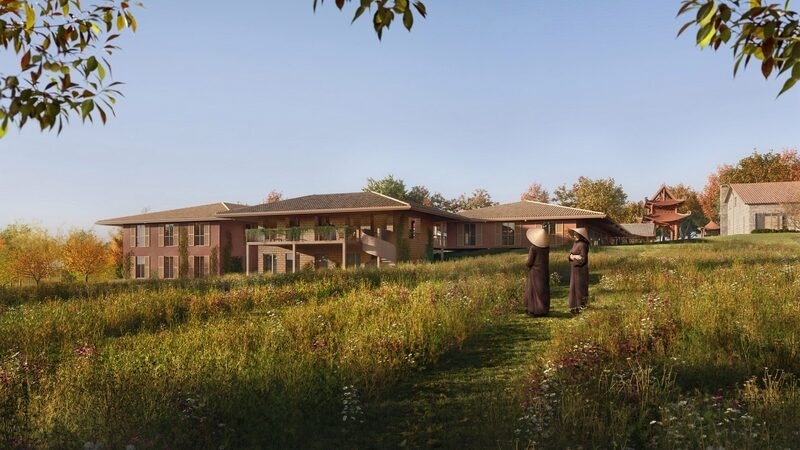
The Plum Village Buddhist monastery forms a low-rise religious complex in southern France composed of multiple timber buildings arranged across a rural site. The project includes residential quarters, meditation halls, dining spaces, and shared facilities distributed among separate pavilion structures. Buildings are organized around open courtyards that allow light and airflow between interior spaces. Timber frames and columns define the structural system, and pitched roofs cover each pavilion. Covered walkways connect the buildings and provide sheltered circulation across the site.
The complex is designed to accommodate monastic living and group retreats. Individual rooms are grouped into dormitory-style buildings positioned away from communal areas. Larger halls are used for meditation and gatherings and are placed near central courtyards. Exterior walls combine timber cladding with glazed openings. Roof overhangs provide shading and protection from rain. The site layout separates quiet residential zones from shared activity areas while maintaining clear circulation paths.
Image Credit: MVRDV, Redvertex
What Makes This Trend Stand Out
- Timber-constructed Religious Buildings
- The use of timber in religious architecture reflects a shift towards sustainable materials, offering eco-friendly alternatives for large-scale building projects.
- Integrated Courtyard Architecture
- The incorporation of open courtyards in building complexes enhances natural ventilation and lighting, promoting energy-efficient design in modern architecture.
- Multi-functional Meditation Spaces
- Designing spaces that serve both meditative and communal purposes highlights a trend towards flexible environments, catering to diverse spiritual and social needs.
Sectors Adopting This
- Sustainable Construction
- The emphasis on timber construction in religious complexes underscores a growing demand in the construction industry for renewable building materials and methods.
- Hospitality and Retreat Centers
- The layout and structure of monastic complexes offer insights into designing retreat spaces that prioritize tranquility and community engagement for unique visitor experiences.
- Architectural Design and Planning
- Innovative use of open courtyards and integrated spaces in the monastery highlights emerging architectural design strategies that balance aesthetics with functional requirements.