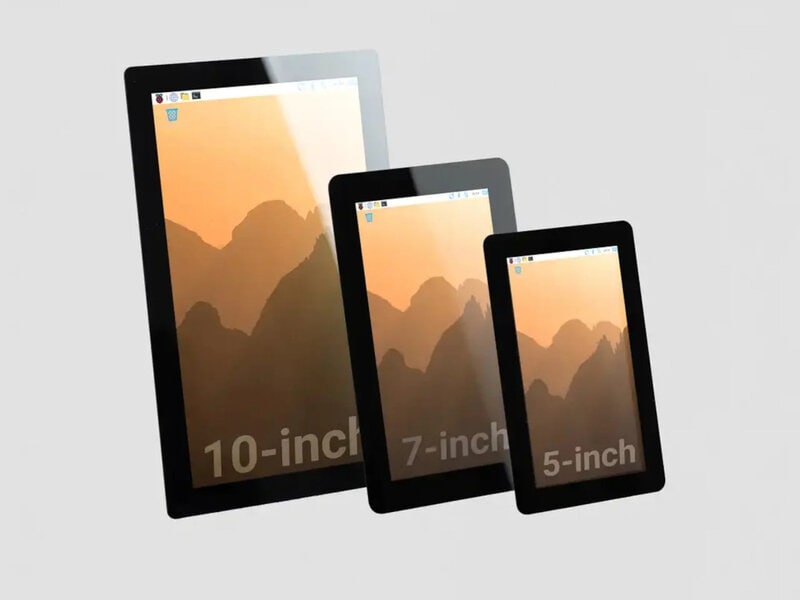
Raspberry Pi Touch Display 2 10-inch is a touchscreen display designed for Raspberry Pi 5 computers and compatible Compute Module carrier boards. The official accessory features a 10-inch IPS panel with a 1200 × 1920 resolution, 10-point capacitive touch support, a 60Hz refresh rate, and an anti-glare finish with 400 cd/m² brightness. Mounted directly to the rear of a Raspberry Pi 5, the display draws power through the GPIO interface while Raspberry Pi OS provides automatic driver detection and integrated touchscreen support.
The display connects using a four-lane DSI interface and supports both portrait and landscape orientations for a range of embedded computing projects. Compared to the 5-inch and 7-inch Touch Display 2 models, the larger panel offers increased screen space for dashboards, kiosks, robotics interfaces, digital signage, and portable systems.
Image Credit: Raspberry Pi
What Makes This Trend Stand Out
- Modular Touch Interfaces
- Compact display modules with native computing-board integration are expanding the potential for customizable dashboards, kiosks, and control panels without complex hardware development.
- Embedded Visual Computing
- Higher-resolution touchscreen panels for single-board computers are creating new pathways for interactive robotics, industrial monitoring, and portable edge devices.
- Low-cost Digital Signage
- Affordable IPS touch displays paired with compact computers are lowering barriers to responsive signage systems for education, retail, and public information environments.
Sectors Adopting This
- Consumer Electronics
- The rise of accessible touchscreen accessories is reshaping how hobbyists, developers, and product teams prototype connected displays and interactive hardware.
- Industrial Automation
- Integrated touchscreens for embedded systems are supporting more flexible machine interfaces, equipment dashboards, and localized control solutions.
- Retail Technology
- Larger plug-and-play displays for compact computers are enabling cost-efficient self-service kiosks, product finders, and in-store engagement screens.