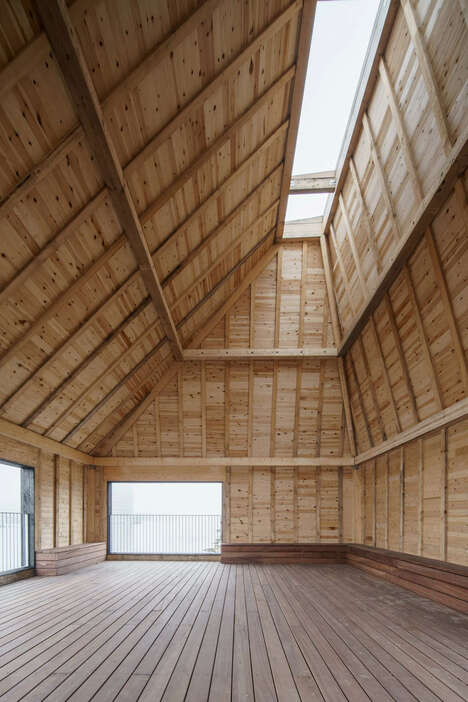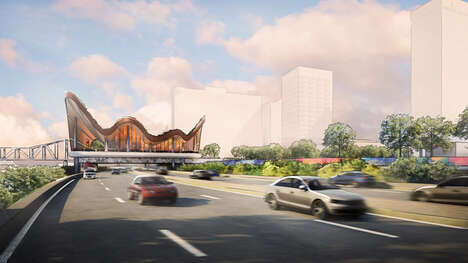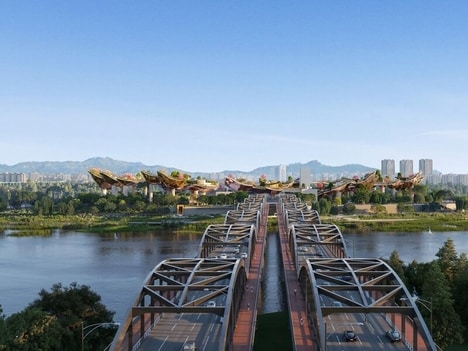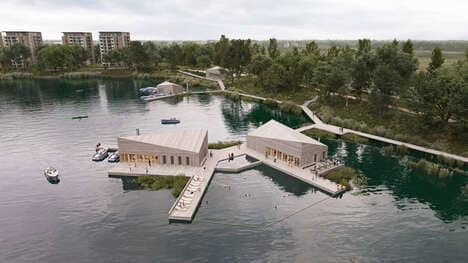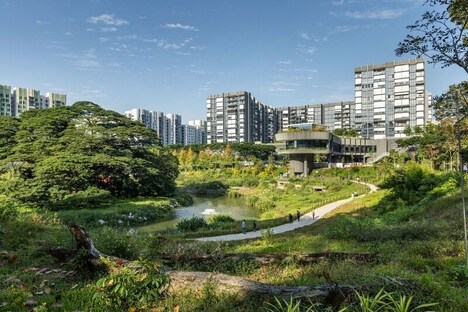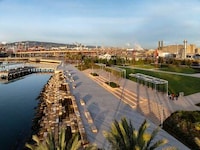
The Tide is the name of a new park in Greenwich, London. The recreational site is set to be five kilometers long and it is a divergence from the traditional format. Its main purpose is not only to facilitate more green spaces in the city but also to establish a connection between the "seven neighborhoods that make up the Greenwich Peninsula."
When designing the park, Diller Scofidio + Renfro focused on providing areas with vantage points and ones that promoted sociability. For example, The Tide features areas that are dotted with artwork — from the recognizable sculptural aesthetic of Damien Hirst to "Antony Gormley's 1999 Quantum Cloud."
Combining nature and art, the new park in Greenwich, London will surely have a positive and unifying effect on the communities in the area.
Photo Credits: Uniform
Why This Trend Is Growing
- Long Looping Parks
- Creating interconnected green spaces that span several kilometers to promote recreation and connection between neighborhoods.
- Art-infused Parks
- Incorporating artwork from renowned artists into park design to create visually appealing and culturally enriching spaces.
- Community-focused Parks
- Designing parks with vantage points and sociable areas to encourage social interaction and community engagement.
Industries Being Reshaped
- Urban Planning
- Opportunity for urban planners to create innovative park designs that connect neighborhoods and promote community interaction through art and nature.
- Art and Culture
- Art institutions and artists can collaborate with city planners to incorporate public art installations in parks, enhancing the cultural experience of urban spaces.
- Tourism and Recreation
- Parks with unique designs and artworks can attract tourists and provide recreational opportunities, boosting local economies and promoting tourism.