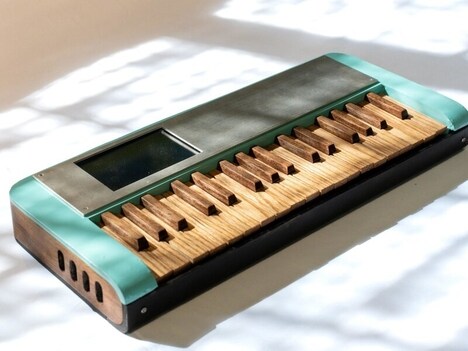
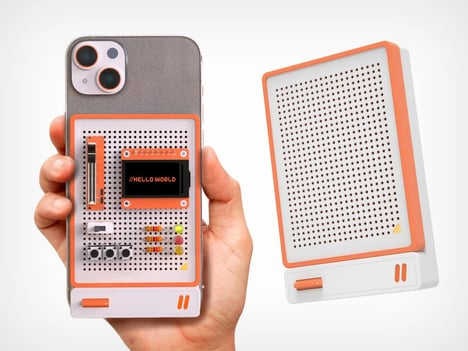
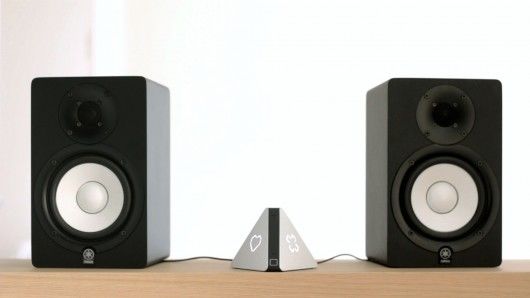
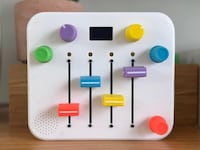
The Oplab printed circuit board merges software with music, which is done by using random objects from around the house.
According to DesignBoom, "the Oplab lets you connect things, toys and random junk laying around the house, which interact with any device that produces sound; grab a broken hard drive, rip it apart, hook it up, and use it as a scratchpad." Having this type of technology will be helpful for kids in a number of ways. For one, it promotes their creative side, putting together a circuit board from various materials. Secondly, these individuals are then able to create music with the device, again promoting creative initiatives that will hopefully help children later on in life. Who knew something so beautiful could come out of unused toys from kids' younger years?
Photo Credits: designboom, teenageengineering
What Makes This Trend Stand Out
- Junk-produced Circuit Boards
- The use of junk to create circuit boards provides an opportunity for sustainable and cost-effective electronics production.
- Software-music Fusion
- The merging of software and music through the Oplab PCB introduces innovative possibilities for music production and sound engineering.
- Promoting Creativity Through Electronics
- The Oplab PCB encourages creativity and DIY electronics, opens up opportunities for new industries such as STEM education.
Sectors Adopting This
- Electronics Manufacturing
- Junk-produced circuit boards disrupt conventional electronics production and contribute to sustainable and eco-friendly manufacturing processes.
- Music Production
- Software-music fusion can disrupt conventional music production and create opportunities for creative experimentation in music-making.
- Education
- The promotion of creativity through electronics can disrupt conventional education systems and create opportunities for new teaching methodologies, particularly in the areas of STEM education.