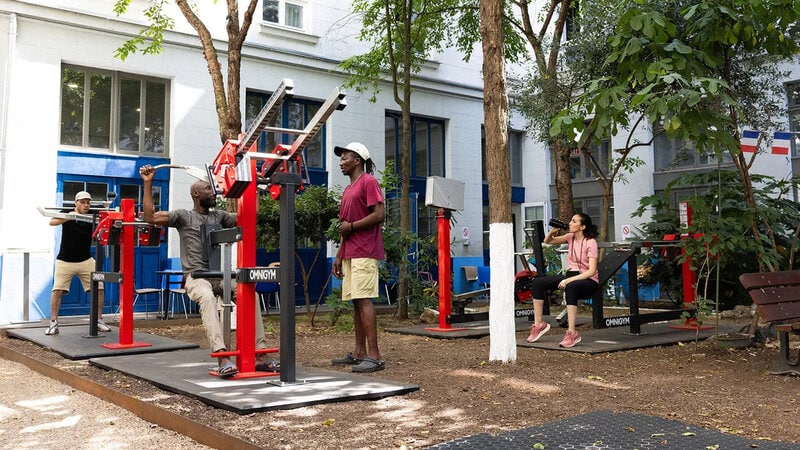
Omnigym brought an outdoor gym to Emmaüs Solidarité in Paris, giving residents a place to exercise on site when stress or sleeplessness hits. Set beside the shelter, the free-access area serves people who may lack money for a private gym or feel unwelcome there.
The site features four machines, including a lat pulldown and a low row, so residents can work out without leaving the grounds. Usage sensors show activity peaks in the evening and overnight. After one month, 80% of residents reported improved physical fitness, while another 90% said the gym helped them meet or talk with other people. Staff also linked the space to fewer fights.
Omnigym shows how four machines inside a shelter can turn outdoor gym gear into a public-health amenity, with the Paris trial broadening where cities and nonprofits place open-access fitness equipment.
Image Credit: Omnigym
Key Themes Behind This Trend
- Shelter-based Wellness
- Fitness amenities embedded within social housing and shelter environments create new pathways for preventative health, stress relief, and community building among underserved residents.
- Sensor-tracked Public Fitness
- Usage data from outdoor exercise equipment reveals behavioral patterns that can inform more responsive urban wellness infrastructure and service design.
- Inclusive Outdoor Gyms
- Free-access fitness spaces positioned outside traditional gym settings reduce barriers tied to cost, stigma, and accessibility for vulnerable populations.
Where This Applies
- Public Health
- Community fitness installations offer scalable models for addressing physical activity, mental wellbeing, and social isolation beyond clinical settings.
- Urban Planning
- Small-footprint exercise zones integrated into shelters and civic spaces expand the role of city infrastructure in supporting everyday health outcomes.
- Nonprofit Services
- Wellness-focused amenities within support organizations can strengthen resident engagement, reduce conflict, and broaden the impact of social care programs.