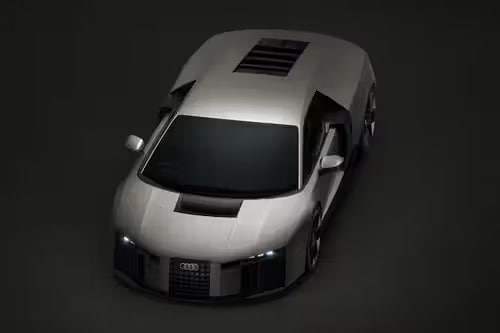
The Audi Nuvolari is a high-performance hybrid supercar that combines a 4.0-liter biturbo V8 engine with three 110-kW axial-flux electric motors and a 7.3-kWh lithium-ion battery. The powertrain produces a combined 1,001 PS and enables a 0–100 km/h time of 2.6 seconds, with a claimed top speed above 350 km/h. Built around an Audi Space Frame structure with carbon-fiber bodywork, the vehicle balances high output with lightweight construction. A predictive quattro system and variable torque vectoring manage power delivery across different driving conditions.
Formula 1-inspired active aerodynamics play a central role in the design. An adaptive rear wing with a drag reduction system contributes to more than 400 kilograms of downforce. The exterior references earlier Audi performance models through contrasting side blades, a low-slung profile, and a tapered roofline.
Image Credit: Audi
Why This Trend Is Growing
- Hybrid Halo Performance
- Ultra-high-output combustion-electric platforms are reframing supercars as technology showcases where electrification enhances acceleration, handling, and brand prestige without abandoning visceral performance cues.
- Active Aero Intelligence
- Formula 1-derived adaptive wings, drag reduction systems, and airflow controls create new differentiation around vehicles that dynamically balance speed, efficiency, stability, and visual drama.
- Predictive Torque Control
- Software-led all-wheel-drive systems with variable torque vectoring signal a shift toward performance architectures where traction, cornering behavior, and driver confidence are shaped by real-time data.
Industries Being Reshaped
- Luxury Automotive
- Prestige automakers are using electrified halo models to translate motorsport technology, lightweight materials, and hybrid powertrains into aspirational products that influence broader premium vehicle portfolios.
- Advanced Materials
- Carbon-fiber bodywork and aluminum space-frame construction highlight growing demand for lightweight structural solutions that support extreme power, safety, and efficiency in next-generation mobility.
- Motorsport Technology
- Racing-derived aerodynamics, hybrid systems, and control software are increasingly migrating into road cars, expanding commercial relevance for suppliers specializing in performance engineering and simulation-driven design.