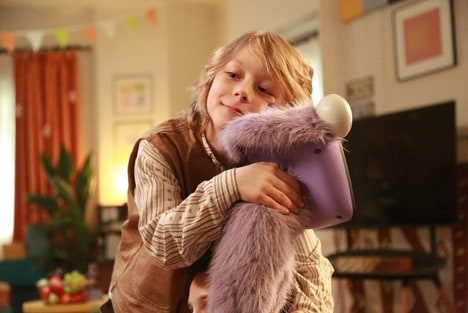
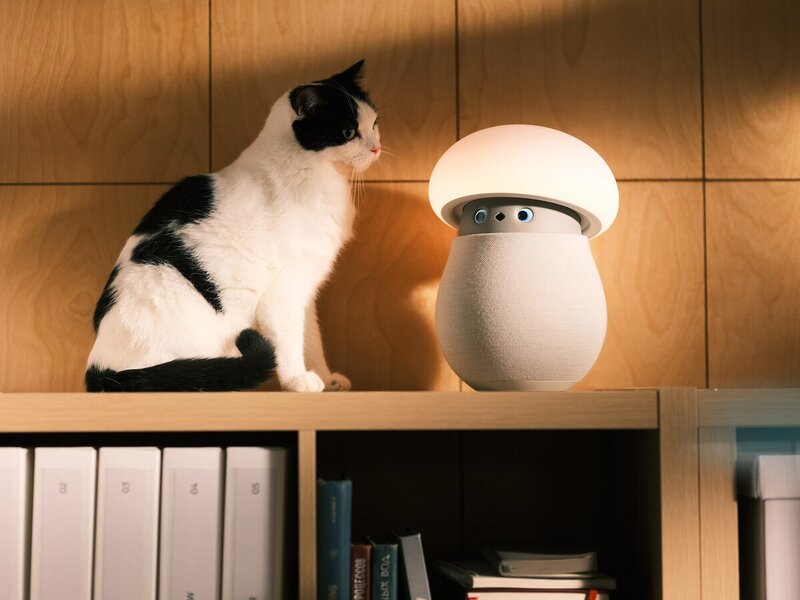
One Kind Artifact built Mori for home users who want company without spoken prompts, using motion, colored lights, and soft audio in place of words. The mushroom-shaped robot reads sound, sight, and touch, then responds through VIBE, its Vitality, Interaction, Bonding, and Emotion system.
It is the first entry in OAK's planned five-piece Artifact line. Mori shifts its mood by time of day and by whether it recognizes a person, and it uses past interactions to shape a personality that changes over time. Images and audio stay on the device, and OAK can transfer a unit's stored identity to a new body if the electronics fail.
The Founder Edition is available now in limited quantities for $649, with a $799 standard version coming later. The price and non-speaking design turn companion robotics toward a quieter, lower-demand role for owners who do not want appointment alerts, chores, or screens.
Image Credit: OKA
Key Themes Behind This Trend
- Quiet Companion Robotics
- Nonverbal robots create space for ambient emotional support through motion, light, and sound, opening new possibilities for low-pressure home technology.
- Evolving Device Personalities
- Personalized behavioral memory allows companion devices to develop unique identities over time, expanding the value of long-term human-machine relationships.
- On-device Emotional AI
- Privacy-preserving sensory processing positions emotionally responsive products as more trustworthy alternatives to cloud-dependent smart home companions.
Where This Applies
- Consumer Robotics
- Home robots designed around presence rather than utility signal a shift toward companionship-focused hardware for everyday living environments.
- Smart Home Technology
- Ambient interfaces using light, movement, and subtle audio broaden smart home experiences beyond screens, voice assistants, and task automation.
- Digital Wellness
- Nonverbal companionship tools introduce a gentler category of emotional support products for users seeking comfort without conversational demands.