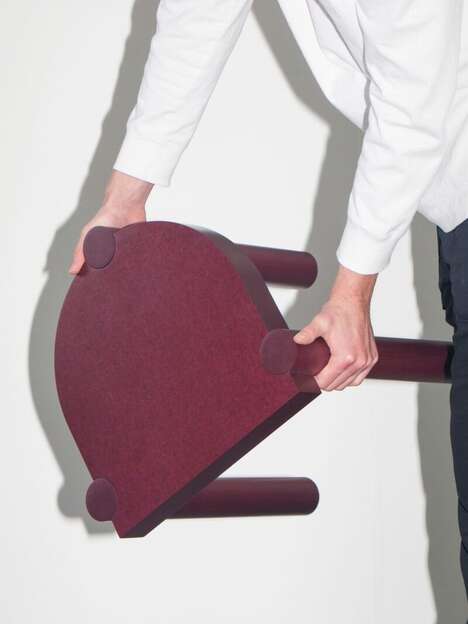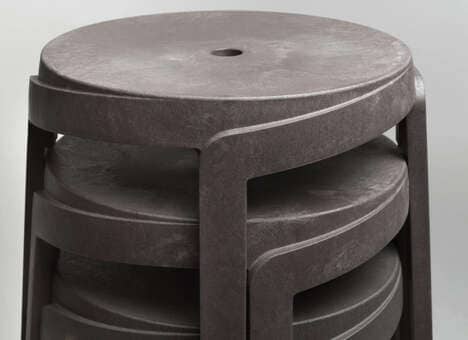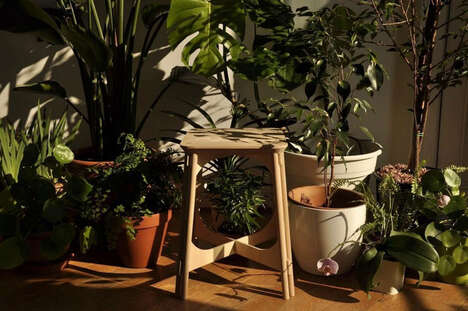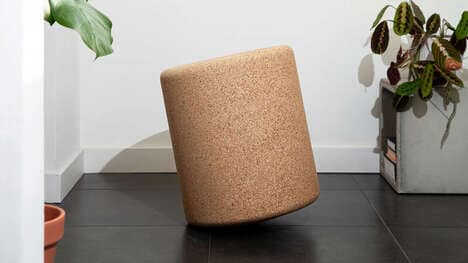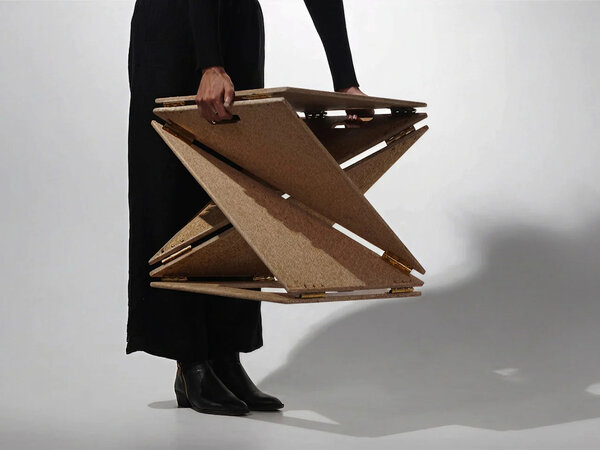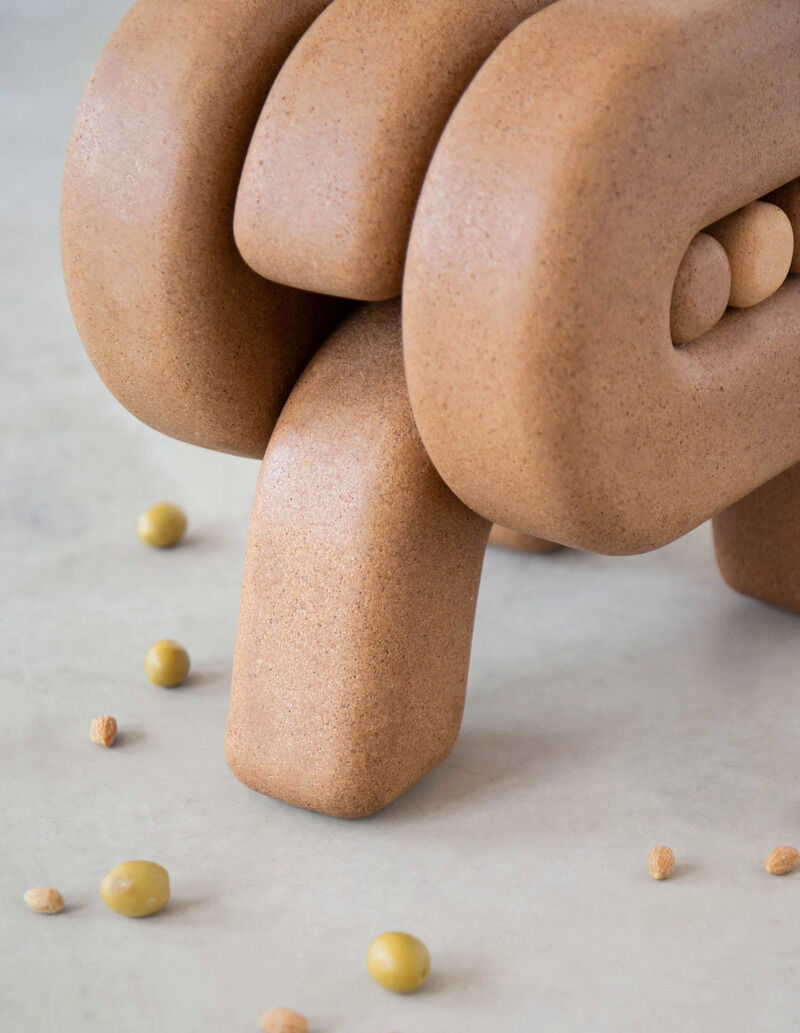
Eneris Collective works in collaboration with Barcelone-based biomaterials brand NaifactoryLAB to develop the Nontalo stool that is made from waste olive pits. The stool is made from six different modules -- this includes three P-shaped pieces that are able to be fused together and positioned in different ways and three straight rods that are used to hold it together.
It forms a variety of shapes including a three-legged stool or a bench seat, with creative liberty to create other silhouettes as well. All of these are made entirely from Reolivar, which is a smooth cork-like material that is made by NaifactoryLAB. It is made by blending olive puts with bio-based binders with other natural ingredients.
Image Credit: Eneric Collective
Key Themes Behind This Trend
- Sustainable Furniture Design
- Opportunities to create furniture using sustainable materials in inventive ways like Eneris Collective's kids chair made from olive pits.
- Circular Economy Innovation
- Innovations in the use of waste materials to create new products such as NaifactoryLAB's Reolivar material made from olive pits.
- Modular Furniture
- Opportunities to design and manufacture furniture in multiple configurations, like Eneris Collective's Nontalo stool that can be transformed into various shapes.
Where This Applies
- Furniture Manufacturing
- Furniture manufacturers can explore novel materials and modular design innovations for their product lines.
- Sustainable Materials Production
- Producers of sustainable materials like NaifactoryLAB's Reolivar can explore opportunities to collaborate with furniture manufacturers.
- Circular Economy Practices
- Companies can explore the potential of creating new products from waste materials as part of circular economy practices and sustainability goals.