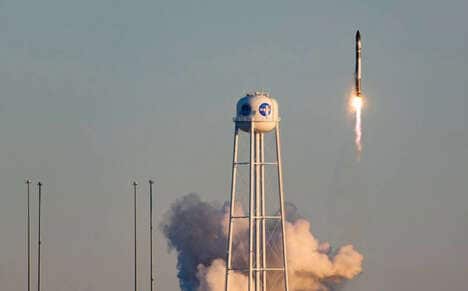
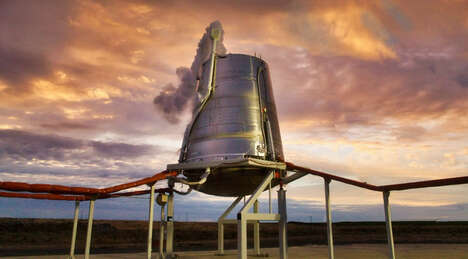
Blue Origin recently launched its first 2020 mission, where the New Shepard rocket took off at the company’s West Texas facility. The recent launch marks the 13th flight for the New Shephard, and the launch was conducted to test NASA’s active landing sensor system. NASA’s system was designed to provide an autonomous, and flexible, landing system that can be used for future missions.
The launch was also the first time Blue Origin had a test flight with an exterior payload, as previously launches had payloads inside the capsule.
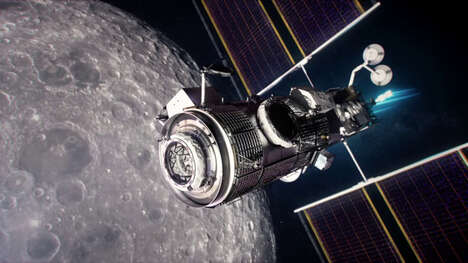
NASA is optimizing an automated landing system with its future Artemis moon mission in mind.
A number of experiments were also on the New Shepard during the launch.
Image Credit: Shutterstock
What's Driving This Trend
- Automated Landing System
- NASA is testing an autonomous and flexible landing system for future missions, providing an opportunity for companies to develop innovative automation technologies.
- Exterior Payloads
- Blue Origin's recent test flight with an exterior payload suggests new possibilities for companies looking to explore the integration of payloads outside the rocket's capsule.
- Moon Missions
- NASA's optimization of an automated landing system for its future Artemis moon mission presents an opportunity for businesses to develop solutions for lunar exploration and beyond.
Who This Affects Most
- Aerospace
- Companies in the aerospace industry can explore the development of automated landing systems, as well as the integration of payloads outside the rocket's capsule for future space missions.
- Robotics
- Developing innovative automation technologies for use in space exploration presents an opportunity for companies in the robotics industry.
- Space Exploration
- With NASA's Artemis moon mission in mind, businesses in the space exploration industry can create and offer products and services that cater to lunar exploration and other space missions.