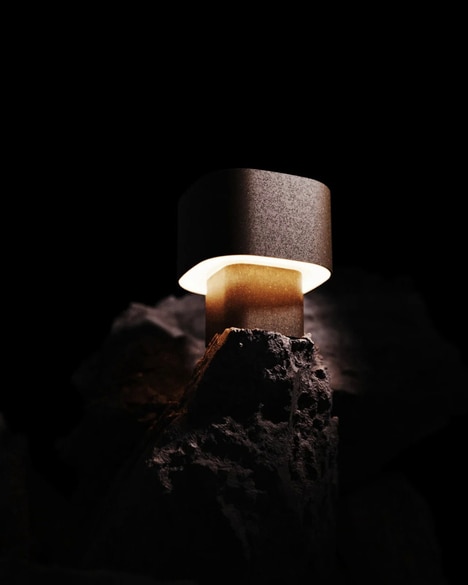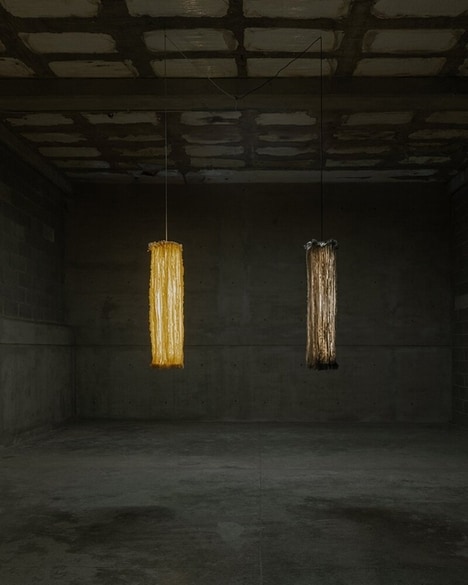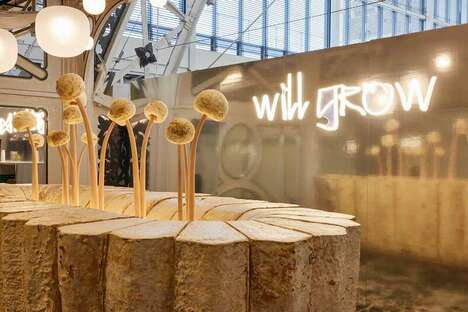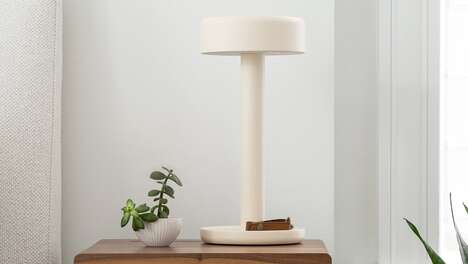

The Mush-Lume Table Lamp doesn't just look like an edible fungus, it is made out of a variety of toadstools. A clever creation that is as stylish as is sustainable, the light fixture shows that people don't have to rely on petroleum-based plastics and non-renewable materials in order to create good-looking furnishings for the home. Although it sports an organic appearance, the Mush-Lume Table Lamp is clean and simple, allowing it to complement many living spaces.
Designed by Danielle Trofe in collaboration with Ecovative Design, the Mush-Lume Table Lamp is grown, not made. Agricultural waste products such as corn husks and stalks are stuffed into a mold and injected with liquid mycelium, which acts as a glue to hold the form together.
What's Driving This Trend
- Biodegradable Lighting
- The use of biodegradable materials in lighting fixtures presents an opportunity for disruptive innovation in the sustainable home furnishings industry.
- Grown, Not Made
- The trend of growing products rather than manufacturing them opens up possibilities for disruptive innovation in sustainable design and production.
- Agricultural Waste Upcycling
- The practice of upcycling agricultural waste into functional products offers opportunities for disruptive innovation in the agricultural and sustainable manufacturing industries.
Who This Affects Most
- Home Furnishings
- The home furnishings industry can explore disruptive innovation by incorporating biodegradable materials and grown products into their designs.
- Sustainable Design
- The field of sustainable design can embrace disruptive innovation by utilizing the concept of growing products and upcycling agricultural waste.
- Sustainable Manufacturing
- The sustainable manufacturing industry can leverage disruptive innovation by developing new processes to upcycle agricultural waste into useful products.