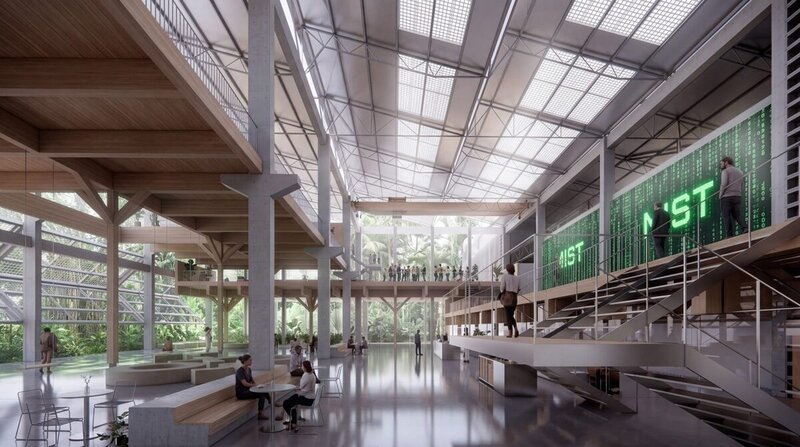
The Museum of Innovation, Startup & Technology is a proposed cultural institution in Bengaluru designed by Heneghan Peng Architects, DROO, and Cadence Architects. Planned for the city's historic NGEF campus, the project will transform an existing steel-framed factory into India's first museum dedicated to innovation, technology, and entrepreneurship. The preserved industrial structure will feature sawtooth roofs, large operable windows overlooking a 105-acre forest, and expansive exhibition spaces that celebrate the country's technological development while retaining the site's manufacturing heritage.
The project combines a public museum with the government-led Innoverse innovation hub, creating two interconnected wings intended to encourage collaboration between research, entrepreneurship, and public engagement. Lofty exhibition halls, split-level communal spaces, raised timber platforms, and exposed concrete elements support a flexible environment for events and educational programming. The Museum of Innovation, Startup & Technology forms part of the wider redevelopment of the NGEF campus into a cultural destination and tree park led by the Karnataka Government.
Image Credit: DROO
What's Driving This Trend
- Adaptive Innovation Museums
- Historic industrial buildings are gaining new relevance as cultural platforms that merge heritage preservation with technology storytelling and entrepreneurial programming.
- Civic Startup Hubs
- Government-backed innovation districts are evolving into public-facing environments where research, startups, education, and community engagement intersect.
- Flexible Exhibition Architecture
- Reconfigurable halls, split-level spaces, and operable design features create opportunities for museums to host changing programs, events, and immersive learning formats.
Who This Affects Most
- Museums and Cultural Institutions
- Museums are expanding beyond static exhibitions into hybrid civic spaces that connect public audiences with innovation ecosystems and contemporary industry narratives.
- Architecture and Urban Redevelopment
- Adaptive reuse projects are reshaping city landmarks into mixed-purpose destinations that balance cultural identity, sustainability, and economic development.
- Technology and Entrepreneurship
- Startup ecosystems are finding new visibility through physical destinations that present innovation as both a public experience and a collaborative development model.